Abstract Art Brain Simulator
Adjust the sliders below to change the properties of the abstract artwork. Watch how your brain's predicted reaction changes based on color temperature, visual complexity, and structural order.
Brain Analysis
Your current settings create a balanced viewing experience. The brain processes this with moderate effort, allowing for reflection without stress.
Why Does That Splash of Color Make You Feel Anxious?
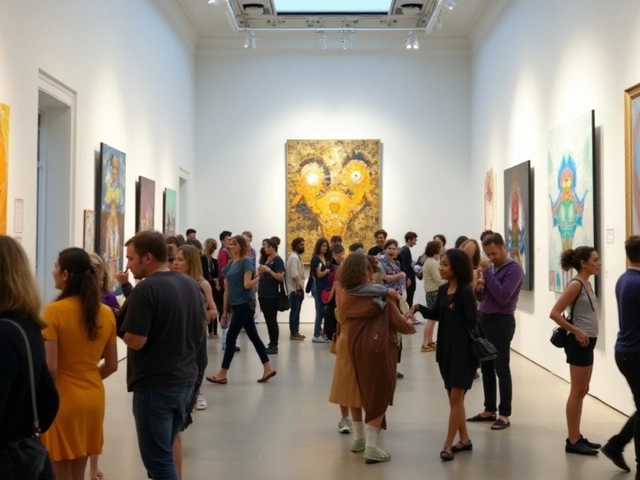
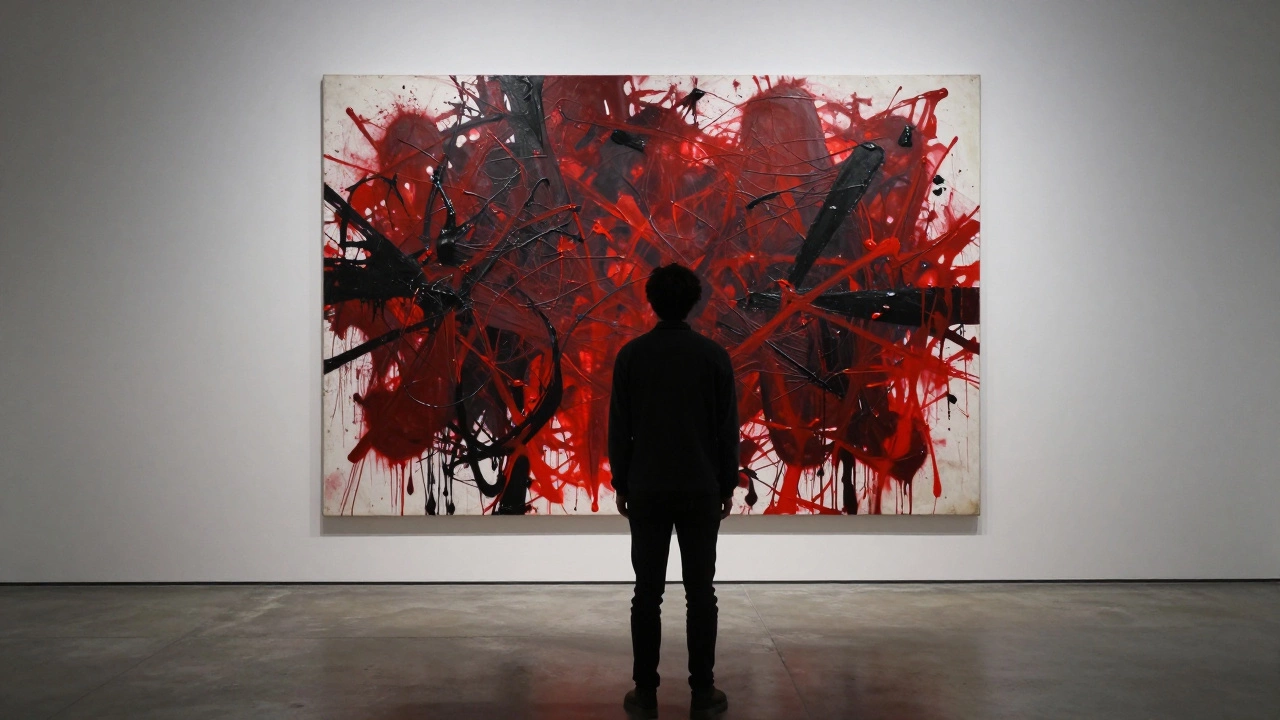
You walk into a gallery. On the wall hangs a canvas covered in chaotic splatters of red and black. There is no tree, no face, no recognizable object. Just noise. Instantly, your stomach tightens. Or maybe you feel a strange sense of calm. Why does an image with no clear meaning trigger such a visceral reaction? The answer lies not in what you see, but in how your brain processes uncertainty.
Abstract art challenges our evolutionary wiring. For thousands of years, humans survived by identifying patterns-recognizing a predator in the bushes or finding water in a dry landscape. Our brains are prediction machines. When we look at representational art, like a realistic portrait, our brains quickly label it: "Person." "Smiling." "Happy." It’s efficient. It’s safe.
But when you look at abstract work, that labeling system fails. The brain hits a dead end. This moment of confusion is where the psychological magic happens. Instead of shutting down, the brain shifts gears. It moves from analytical processing to emotional interpretation. This shift can lead to profound states of reflection, anxiety, or joy, depending on your personal history and current mental state.
Key Takeaways
- Cognitive Load: Abstract art forces the brain to work harder to find meaning, increasing engagement but potentially causing frustration.
- Emotional Mirroring: Without a narrative, abstract art acts as a mirror, reflecting your current mood rather than imposing one.
- Color Psychology: Warm colors (red, orange) trigger arousal and energy, while cool colors (blue, green) promote relaxation.
- The Uncanny Valley of Meaning: Too much chaos causes stress; too little structure feels boring. The sweet spot is "controlled ambiguity."
- Therapeutic Potential: Engaging with abstract forms can help process trauma by bypassing verbal defenses.
The Brain on Ambiguity: Cognitive Processing
When you view a photograph of a dog, your visual cortex identifies the shape, texture, and context almost instantly. This is called bottom-up processing. But abstract expressionism, pioneered by artists like Jackson Pollock and Mark Rothko, disrupts this flow. You have to use top-down processing. You bring your own memories, biases, and expectations to the canvas to make sense of it.
This extra mental effort has a name: cognitive load. Research in neuroaesthetics suggests that moderate cognitive load increases enjoyment. If the art is too easy to understand, it’s boring. If it’s completely random noise, it’s stressful. The best abstract art sits in the middle-it offers enough structure for the brain to latch onto, but enough mystery to keep it guessing.
Consider the difference between looking at a geometric pattern by Piet Mondrian and a chaotic drip painting by Pollock. Mondrian’s grids provide clear lines and right angles. Your brain finds comfort in the order. It reduces anxiety. Pollock’s work, however, mimics natural chaos-like wind-blown sand or turbulent water. Your brain recognizes these fractal patterns from nature, which can induce a state of awe or unease, depending on whether you associate chaos with danger or freedom.
Color as Emotional Language
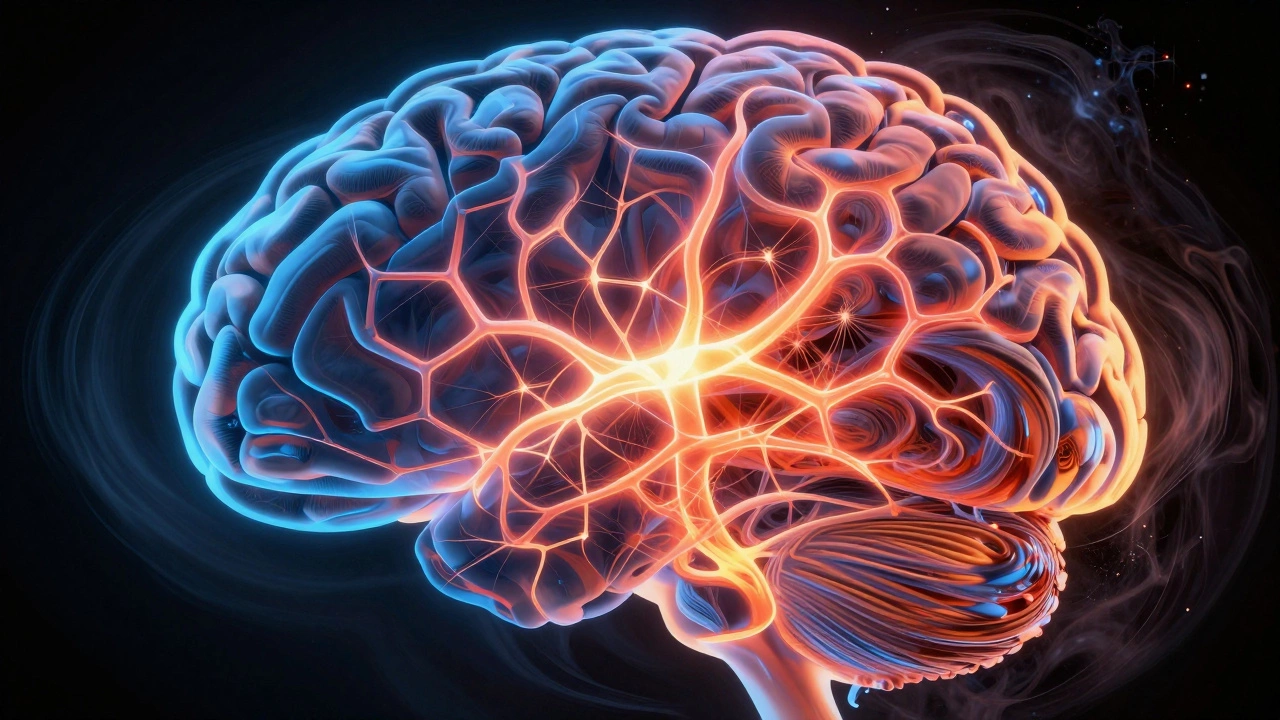
If shapes provide the structure, color provides the emotion. In abstract art, color is not decorative; it is communicative. Artists use specific hues to bypass logic and speak directly to the limbic system, the part of the brain responsible for feelings.
- Red: Increases heart rate and blood pressure. It signals urgency, passion, or anger. A large field of red can feel aggressive or energizing.
- Blue: Lowers physiological arousal. It is associated with stability, sadness, or tranquility. Large blue fields often create a meditative state.
- Yellow: Stimulates intellectual activity and creativity. However, intense yellow can cause eye strain and irritability if overused.
- Black: Represents void, mystery, or death. In abstract works, black often grounds the composition, providing weight and seriousness.
Think about Mark Rothko’s color field paintings. He used large blocks of soft, glowing colors. Viewers often report feeling overwhelmed or even crying in front of his work. Why? Because without a subject to distract them, they are left alone with the pure emotional weight of the color. A deep maroon might feel like grief; a bright orange might feel like hope. You decide.
Projection and the Rorschach Effect
Have you ever played with inkblots as a child? You saw faces, animals, and monsters. Abstract art functions similarly to the Rorschach test. Because there is no objective reality depicted, you project your internal world onto the canvas.
This phenomenon is known as psychological projection. If you are going through a breakup, a jagged, torn canvas might look like shattered glass and pain. If you are celebrating a promotion, that same canvas might look like dynamic energy and breakthrough. The art doesn’t change; your perception does.
This makes abstract art highly personal. Two people can stand in front of the same piece and have opposite reactions. One might find it liberating; the other might find it confusing and pretentious. Neither is wrong. The value of the experience comes from the self-reflection it triggers, not from understanding the artist’s intent.
| Element | High Intensity Effect | Low Intensity Effect | Brain Response |
|---|---|---|---|
| Color Saturation | Arousal, Excitement | Calm, Boredom | Limbic System Activation |
| Line Complexity | Anxiety, Overwhelm | Clarity, Peace | Prefrontal Cortex Engagement |
| Symmetry | Order, Stability | Chaos, Tension | Visual Cortex Pattern Recognition |
| Scale | Awe, Immersion | Intimacy, Detail | Spatial Awareness Networks |
Why Some People Hate Abstract Art
It is common to hear people say, "My kid could do that." This dismissal is not just about skill; it is about psychological resistance. For some viewers, the lack of representation feels like a violation of the social contract of art. They expect art to tell a story or depict beauty in a traditional sense.
When that expectation is broken, the brain registers it as a threat or an error. This can trigger frustration or anger. Additionally, people with high levels of need for closure-a personality trait where individuals prefer definite answers over ambiguity-often struggle with abstract art. They want a quick resolution, and abstract art denies them that.
However, this friction can be valuable. Learning to sit with the discomfort of not knowing can build cognitive flexibility. It teaches you to tolerate uncertainty, a crucial skill in life. If you find yourself hating a piece of abstract art, ask yourself: What am I afraid of seeing here? Often, the dislike reveals more about your own rigid thinking than the artwork itself.
Abstract Art in Therapy and Healing
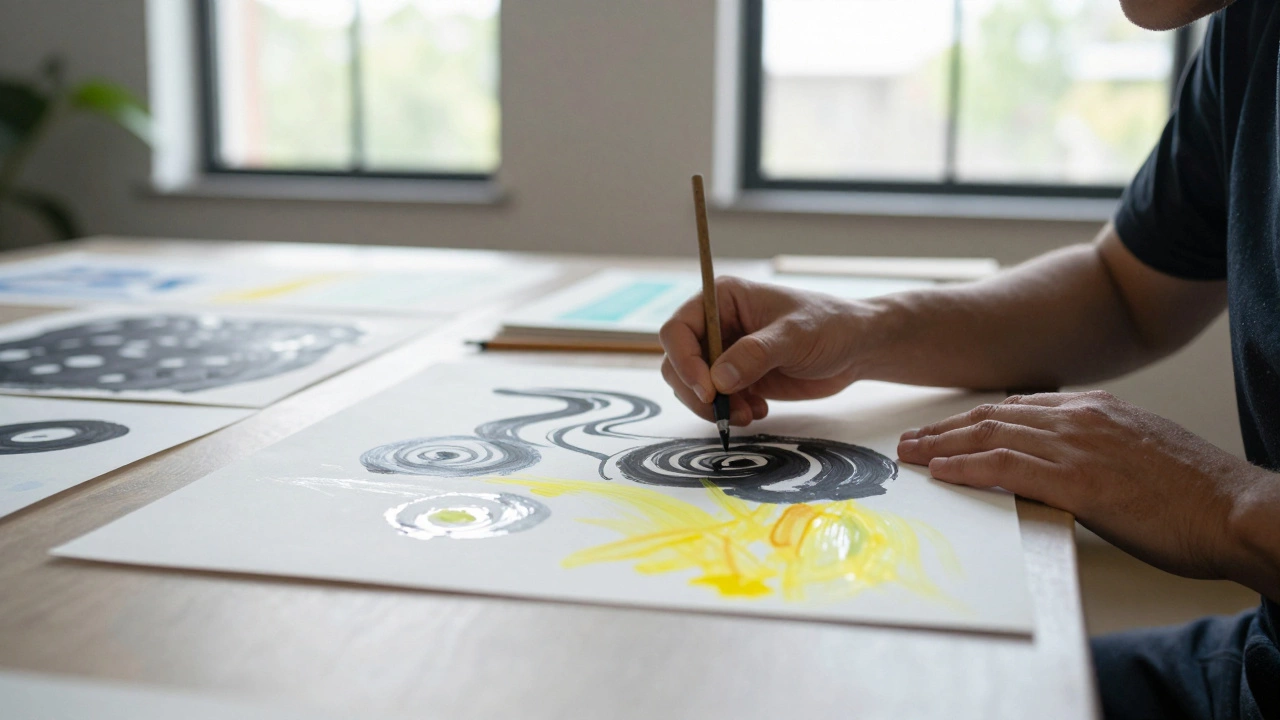
Beyond galleries, abstract art plays a significant role in art therapy. Therapists often encourage clients to create non-representational images because words can be limiting. Trauma, for example, is often stored in the body and the emotional brain, not in the language centers.
By using abstract forms-scribbles, colors, textures-clients can express feelings they cannot articulate. A dark, heavy swirl might represent depression. A sudden burst of white might represent hope. This process helps integrate fragmented emotions and reduces psychological distress.
Viewing abstract art can also be therapeutic. Studies show that spending time in museums lowers cortisol levels (the stress hormone). Abstract art, in particular, encourages mindfulness. Since there is no plot to follow, you are forced to stay in the present moment, observing your immediate sensory experience. This is similar to meditation practices.
How to Engage with Abstract Art
If you want to get more out of abstract art, stop trying to "solve" it. Instead, try these steps:
- Pause: Stand in front of the piece for at least two minutes. Let your initial judgment settle.
- Observe: Notice the physical properties. Is the paint thick? Are the lines sharp or blurry? What is the dominant color?
- Feel: Check your body. Do your shoulders tense up? Do you feel relaxed? Where do you feel the emotion?
- Associate: What does this remind you of? A storm? A memory? A sound? Don’t censor your associations.
- Reflect: Ask yourself why this piece affects you this way. Is it triggering something from your past?
By shifting from analysis to experience, you unlock the true power of abstract art. It becomes a tool for self-discovery rather than a puzzle to be solved.
Does abstract art actually affect mood?
Yes. Studies in environmental psychology show that exposure to abstract art can influence mood states. Calming abstract pieces with cool colors and smooth lines can reduce stress, while chaotic, high-contrast pieces can increase arousal and alertness. The effect depends on individual preference and current emotional state.
Why do some people feel smart when they understand abstract art?
Understanding abstract art often requires cultural knowledge or familiarity with art history. When someone decodes the symbols or techniques, they receive a dopamine hit associated with problem-solving and social status. This "aha" moment reinforces their identity as culturally literate or intelligent.
Can abstract art help with anxiety?
For some, yes. Abstract art that emphasizes balance, symmetry, and soothing colors can act as a visual anchor, helping to ground anxious thoughts. However, overly complex or dissonant abstract art may worsen anxiety in sensitive individuals. It is important to choose art that resonates positively with your nervous system.
Is there a "right" way to interpret abstract art?
No. Abstract art is designed to be open-ended. The artist may have had an intention, but the viewer’s interpretation is equally valid. The goal is not to guess the artist’s mind, but to explore your own emotional and cognitive response to the visual stimuli.
How does color psychology apply to abstract art?
Color psychology suggests that different hues evoke specific emotional responses. In abstract art, where form is minimal, color becomes the primary carrier of meaning. Warm colors like red and orange tend to stimulate energy and passion, while cool colors like blue and green promote calm and introspection.