Apr 29, 2025
Free Digital Art Apps: Which Ones Actually Deliver?
When you see yellow and blue in art, a powerful color pairing rooted in color theory that creates visual tension and harmony. Also known as complementary colors, this combination is one of the most used and studied in painting because it naturally pulls the eye and creates depth without needing other hues. Artists don’t just pick these colors because they look nice—they use them because they work. Yellow, bright and warm, pulls forward like sunlight. Blue, cool and receding, pushes back like shadow or sky. Together, they create a visual rhythm that’s easy to feel, even if you don’t know the science behind it.
This pairing shows up everywhere—from Monet’s water lilies where blue water meets yellow reflections, to abstract works by Kandinsky using bold blocks of each to stir emotion. It’s not just about contrast; it’s about balance. Too much yellow can feel harsh. Too much blue can feel cold. But when they’re tuned right, they make each other sing. You’ll find this in landscape paintings where a sunlit field meets a distant hill, in portraits where a yellow scarf pops against a blue coat, and even in digital art where designers use it to make buttons stand out. The color contrast, the visual difference between two hues that affects how they interact and draw attention between yellow and blue is so strong it can carry an entire composition without needing detail. That’s why beginners often start with just these two colors—they teach you how light, shadow, and mood work before you add anything else.
There’s also a psychological layer. Yellow feels hopeful, energetic, even urgent. Blue feels calm, steady, sometimes lonely. Artists use that push and pull to tell stories without words. A single blue boat on a yellow sea isn’t just a scene—it’s isolation. A yellow bird in a blue sky isn’t just a bird—it’s freedom. And when you see how these colors appear across the posts below, you’ll notice how often they’re used to solve the same problems: how to make something feel real, how to guide the viewer’s eye, how to make quiet moments feel loud. You’ll find guides on painting landscapes with these tones, how to mix skin tones using blue shadows against yellow highlights, and even how to use them in digital art to create depth on a screen. This isn’t just theory. It’s a tool every artist, whether they’re painting a single apple or a whole coastline, comes back to again and again.
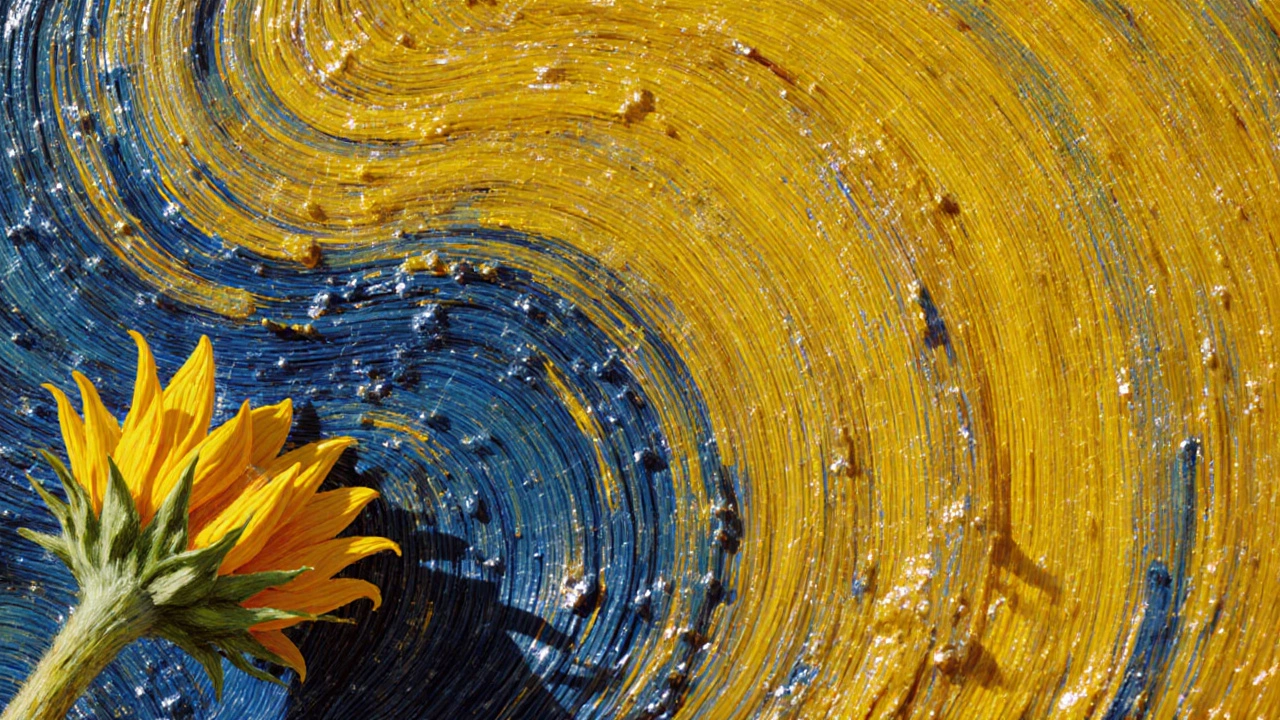
Vincent Van Gogh most often used yellow and blue in his oil paintings to express emotion, light, and depth. These colors defined his most famous works, from Sunflowers to The Starry Night.