Oct 24, 2025
Why Modern Art Is Often Seen As Lacking Skill - A Critical Look
When working with best color for portrait, the selection of hues that faithfully capture a subject’s likeness and mood. Also known as portrait color palette, it determines the emotional impact of a painting.
Understanding color theory, the set of principles that explain how colors interact, contrast, and harmonize is the first step toward a strong portrait. With color theory in mind, you can mix pigments that complement each other and avoid jarring clashes. Next comes skin tones, the range of hues found in human skin, from warm pinks to cool olives. Knowing the underlying undertones lets you choose pigments that render depth and realism, whether you’re painting a sun‑kissed cheek or a shadowed jawline. Finally, the painting medium, the base (oil, acrylic, watercolor, etc.) that carries the color to the canvas influences how colors blend, dry, and appear under light.
Choosing the best color for portrait isn’t a random guess; it’s a blend of three core ideas. First, best color for portrait encompasses color theory, meaning you apply complementary and analogous schemes to create balance. Second, selecting a portrait color palette requires knowledge of skin tones, so the painted subject looks natural in varying lighting conditions. Third, painting medium influences color accuracy, because oils stay vivid longer while watercolors demand careful layering. By aligning these three pillars, you avoid common pitfalls like flat flesh tones or muddy mixes.
Beyond the basics, you’ll find that lighting conditions, the subject’s clothing, and the intended mood can shift the optimal hue choices. Artists who experiment with cool blues for shadows or warm ochres for highlights often achieve a more three‑dimensional feel. Likewise, layering glazes in oil can deepen richness, while fast‑dry acrylics let you build up color quickly for a fresh look. Keeping these variables in mind gives you a toolbox that adapts to any portrait scenario.
Below you’ll see a curated list of articles that dive deeper into each of these areas—rules for sketching in galleries, the science behind skin tone mixing, digital workflows for portrait colors, and more. Use them as a roadmap to refine your palette, sharpen your technique, and bring your portrait subjects to life.
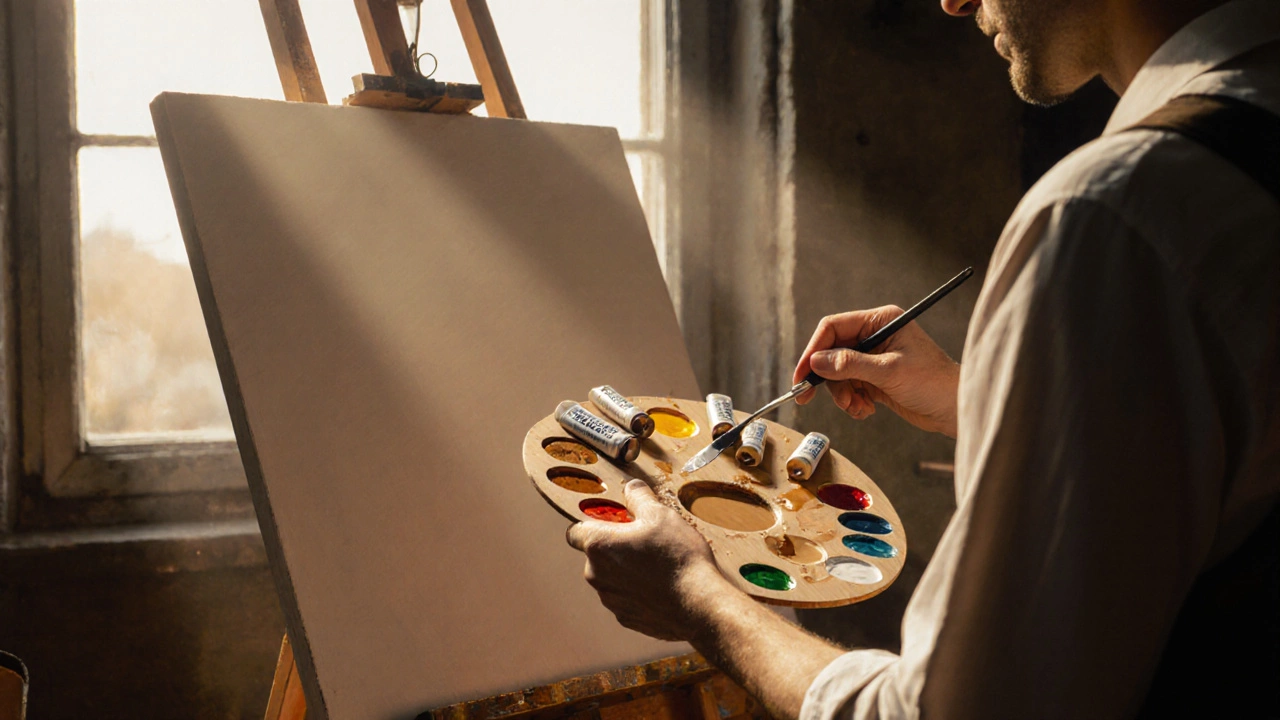
Discover the optimal color choices for portrait painting, learn how to build a skin‑tone palette, compare warm and cool strategies, and avoid common mixing mistakes.