Digital Art Profitability Estimator
Most artists overlook hidden costs. This tool helps you determine if your chosen business model is actually profitable after fees, taxes, and overheads.
Input Your Metrics
Enter your data and click Calculate to see your estimated profitability.
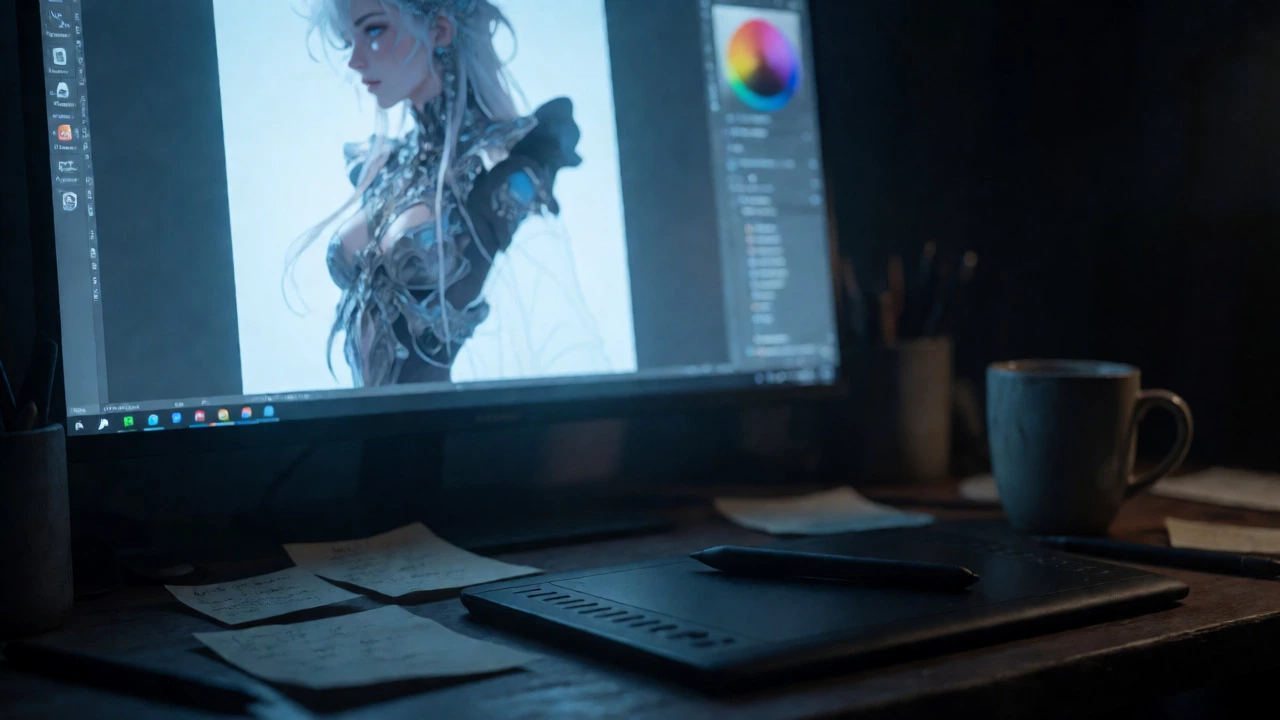
You stare at your screen, a half-finished character design glowing in the dark. You’ve spent six hours on it. The question isn’t whether you’re good enough-it’s whether anyone will pay for it. In 2026, the answer is a loud "yes," but with a massive asterisk. The days of making quick cash by uploading random JPEGs to a marketplace are gone. Today, digital art profitability depends entirely on your business model, not just your brush skills.
If you’re treating your art like a lottery ticket, you’ll lose. If you treat it like a product line, you can build a sustainable income. Let’s break down where the money actually is right now, cutting through the hype and looking at real numbers from platforms like Etsy, Gumroad, and emerging Web3 communities.
The Death of the "Passive Income" Myth
Everyone tells you that selling digital downloads is passive. You create once, sell forever. That’s true, but only if people find your work. In 2026, the market is saturated. There are millions of artists on Etsy and Creative Market. To make this model profitable, you need volume and niche targeting.
Consider the math. If you sell a digital planner for $15, you keep about $12 after fees. To earn a modest $3,000 a month, you need 250 sales. That requires consistent traffic. Most solo artists hit a ceiling at around $500-$800 a month because they rely solely on organic search. To break through, you need to drive your own traffic via social media or email lists. If you hate marketing, this route might feel less profitable than it looks on paper.
NFTs: The Volatile Wild Card
You might remember the 2021 NFT boom. By September 2026, the dust has settled. We are no longer in the speculative frenzy phase; we are in the utility phase. Selling pure PFP (Profile Picture) collections is harder now unless you have an established brand.
However, Non-Fungible Tokens remain highly profitable for specific niches. Artists who integrate their work into gaming ecosystems or offer exclusive community access see steady revenue. For example, concept artists working with indie game studios often mint limited edition assets that retain value better than generic art. The key here is utility. Does owning your token give the buyer something tangible, like a high-res file for printing or access to a Discord channel? If yes, you can charge a premium. If it’s just a receipt for ownership, the profit margins are thin due to gas fees and platform cuts.
| Channel | Avg. Monthly Revenue (Solo Artist) | Effort Level | Scalability |
|---|---|---|---|
| Digital Downloads (Etsy/Gumroad) | $400 - $1,500 | Medium (High upfront, low ongoing) | High |
| Print on Demand (Redbubble/Printful) | $100 - $600 | Low (Design & Upload) | Medium |
| Freelance Commissions | $2,000 - $5,000+ | High (Time-for-money) | Low |
| NFTs / Web3 Assets | $0 - $10,000+ (Highly Variable) | Very High (Community Mgmt) | Variable |
| Patreon / Subscriptions | $500 - $2,500 | Medium (Consistent output) | Medium |
Commissions: The Reliable Cash Cow
While everyone chases passive income, freelance commissions remain the most reliable way to put food on the table. Why? Because clients pay for your time and skill directly. There is no algorithm deciding your visibility.
In Vancouver, I see many illustrators charging between $150 and $400 per character portrait. If you land two mid-tier clients a week, you’re clearing over $2,500 monthly before taxes. The downside? You can’t scale beyond your waking hours. To maximize profitability here, you must optimize your workflow. Use templates for contracts, automate invoicing, and batch similar tasks. Don’t let administrative chaos eat your profit margin.

Print on Demand: Low Risk, Low Reward
Print on Demand (POD) services like Printful or Redbubble handle production and shipping. You upload a design; they print it on t-shirts, mugs, or posters when someone buys it. You get a royalty, usually 10-20% of the sale price.
Is it profitable? Barely, as a primary income source. A $25 mug nets you maybe $4. You need hundreds of designs live to generate meaningful side cash. However, POD is excellent for testing which designs resonate with audiences without inventory risk. Once a design goes viral, you can switch to direct sales (like Shopify) to capture higher margins. Treat POD as a marketing funnel, not a bank account.
Building a Hybrid Model
The most profitable digital artists in 2026 don’t pick one lane. They stack revenue streams. Here’s a common structure for a full-time artist:
- Base Income: Freelance commissions provide immediate cash flow.
- Passive Layer: Digital assets (brushes, textures, stock illustrations) sold on Creative Market or Gumroad.
- Community Layer: A Patreon tier offering behind-the-scenes process videos and PSD files.
- Speculative Layer: Occasional NFT drops or limited edition physical prints.
This diversification protects you. If the commission market slows down, your digital shop keeps running. If NFT prices dip, your Patreon subscribers stay loyal. It reduces the stress of relying on a single algorithm or client.

Hidden Costs That Eat Profits
Before you calculate your hourly rate, subtract these realities:
- Software Subscriptions: Adobe Creative Cloud costs roughly $60/month. Procreate is a one-time buy, but plugins add up.
- Hardware Depreciation: Your iPad or Wacom tablet lasts 3-5 years. Set aside $20/month for replacements.
- Taxes: In Canada, self-employed individuals must set aside significant funds for GST/HST and income tax. Aim for 30% of gross revenue.
- Marketing Time: Posting on Instagram or TikTok takes time. If you spend 5 hours a week promoting, factor that into your hourly rate.
Many beginners ignore these costs and think they’re earning $20/hour when they’re actually earning $8/hour. Be honest with your pricing to cover these overheads.
So, Is It Worth It?
Selling digital art is profitable if you approach it like a small business owner, not just an artist. The barrier to entry is low, which means competition is fierce. But the scalability is unmatched compared to traditional mediums. You don’t need canvas, paint, or shipping logistics for digital files.
Start small. Pick one platform. Create ten products. Test them for three months. Track your time versus earnings. If you’re making less than minimum wage, tweak your strategy-maybe change your niche, raise prices, or improve your SEO keywords. The tools are free to try. The only cost is your time.
How much do beginner digital artists typically earn?
Beginners often earn between $200 and $500 a month initially. This usually comes from a mix of small commissions and low-volume digital downloads. Consistency is key to moving past this stage.
Do I need expensive equipment to start selling digital art?
No. An entry-level drawing tablet (like a Huion or XP-Pen) and free software like Krita or Blender are sufficient to start. Clients care about the final image quality, not the price tag of your hardware.
Which platform is best for selling digital art downloads?
Etsy is great for discoverability due to its built-in search engine. Gumroad offers higher profit margins and more control but requires you to bring your own traffic via social media or email lists.
Are NFTs still worth pursuing in 2026?
Yes, but only if you focus on utility and community building rather than speculation. Pure artistic NFTs have lower liquidity now, while those tied to games, memberships, or exclusive content maintain better value.
How do I price my digital art commissions?
Calculate your desired hourly rate, estimate the hours needed, and add a buffer for revisions and admin. Never price based solely on what others charge; know your own financial needs first.