
Taylor Swift Net Worth & Revenue Simulator
Configure Wealth Sources
Estimated Total Net Worth
Status: Verified Billionaire
The "Taylor's Version" Impact: Streaming Calculator
Compare standard artist payouts vs. the power of owning your masters.
Standard Artist Share (No Master Ownership)
Taylor's Advantage (Master Ownership)
It is July 2026, and the question on everyone’s lips isn’t just about her latest single or tour date. It is about the sheer scale of her financial empire. Taylor Swift is an American singer-songwriter who has redefined the music industry through strategic ownership of her masters and record-breaking live performances. By mid-2026, estimates place her net worth between $1.4 billion and $1.5 billion. She is not just a wealthy celebrity; she is one of the few artists in history to reach billionaire status primarily through her own creative work and touring.
You might wonder how a musician accumulates this kind of capital. It is not magic. It is a mix of aggressive touring, smart real estate moves, and a historic battle for artistic control that paid off in dividends. Let’s look at where the money actually comes from.
The Eras Tour: The Engine of Wealth
If there is one thing driving Taylor Swift’s finances in 2026, it is the Eras Tour is a global concert tour celebrating her discography that became the first tour in history to gross over $1 billion. This wasn’t just a series of concerts; it was an economic event. By late 2023, the tour had already broken records. As we move into 2026, the long-tail effects are still visible. While the main leg concluded, the documentary film rights, merchandise sales, and potential international extensions keep cash flowing.
Concerts are where musicians make their real money today. Streaming pays fractions of cents per play. Physical sales are niche. But tickets? People pay premium prices for experiences. The Eras Tour sold out stadiums worldwide. With ticket prices ranging from standard admission to VIP packages costing thousands, the revenue per show was astronomical. Industry reports suggest she earned roughly $100 million per month during the peak of the tour. That kind of monthly income, sustained for over a year, builds a fortune quickly.
| Revenue Source | Typical Artist Share | Taylor Swift's Advantage |
|---|---|---|
| Streaming | $0.003 - $0.005 per stream | High volume due to catalog size |
| Physical Sales | ~$8-$10 per album | Fan base buys multiple copies |
| Live Touring | 10% - 20% of gross | Negotiated higher cut + merch revenue |
| Catalog Ownership | Varies by contract | Owns masters for new and re-recorded albums |
Reclaiming the Masters: The "Taylor's Version" Strategy
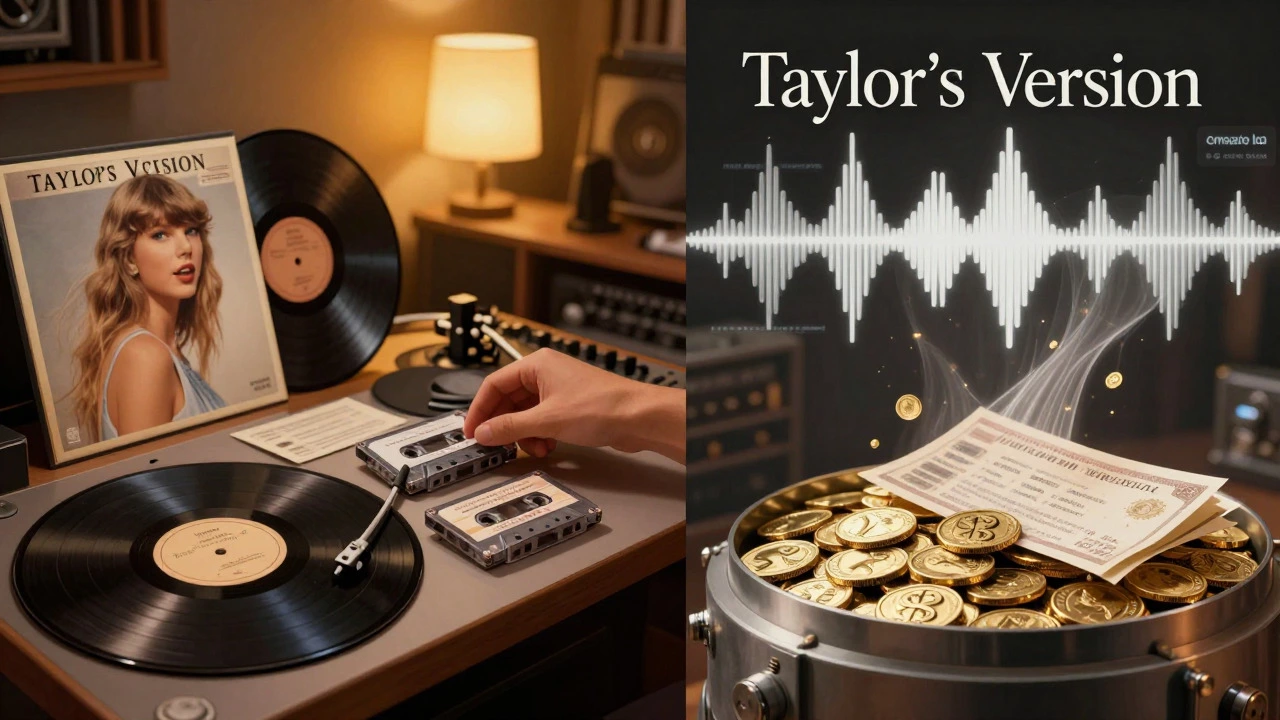
For years, Taylor fought to own her past work. In 2019, Scooter Braun is a talent manager who acquired the publishing rights to Taylor Swift's original master recordings through his company Ithaca Holdings. This sparked a public feud and a business pivot. Instead of letting someone else profit from her early hits, she decided to re-record them. This strategy, known as "Taylor's Version," allows her to control the licensing and revenue from songs like "Love Story" and "Blank Space."
This move was risky but brilliant. Fans rallied behind her, buying both the old versions and the new ones to support her cause. By 2026, she has released re-recordings of *Fearless*, *Red*, *Speak Now*, and *1989*. Each release topped charts globally. More importantly, she now owns the masters to these re-recordings. This means every time a brand uses "Shake It Off (Taylor's Version)" in an ad, she gets the full royalty check. It transforms her back catalog from a liability into a self-sustaining asset.
Real Estate and Tangible Assets
Cash is king, but assets build legacy. Taylor Swift is also a significant player in the real estate market. She doesn’t buy homes just to live in them; she buys properties that hold value. Over the years, she has purchased estates in Nashville, New York, Rhode Island, and Los Angeles. Some of these properties have been flipped for profit, while others serve as personal retreats.
In 2026, her real estate portfolio includes multi-million dollar mansions and land holdings. For example, her Rhode Island estate, which she bought for around $7 million, is part of a larger collection of properties valued well over $100 million combined. Real estate provides stability. When the music industry slows down or tour dates are canceled, property values generally remain steady or appreciate. It diversifies her income beyond the volatile entertainment sector.
Merchandise and Brand Partnerships
Don’t underestimate the power of a t-shirt. During the Eras Tour, merchandise lines often sold out within minutes. Taylor’s team releases limited-edition items tied to specific eras of her career. These aren’t just generic band tees; they are collectibles. Prices range from $30 for a shirt to hundreds for exclusive jackets. With millions of attendees and online buyers, this segment generates tens of millions annually.
She is also selective with brand deals. Unlike many influencers who promote anything for a fee, Taylor chooses partners that align with her image. Past partnerships include brands like Diet Coke, Keds, and Apple Music. These deals are lucrative because her audience trusts her recommendations. However, she avoids over-commercialization, which preserves her authenticity and keeps fan engagement high.
Investments and Philanthropy
Beyond music and real estate, Taylor invests wisely. She has stakes in various ventures, though details are kept private. What is public is her philanthropy. She donates millions to education, disaster relief, and LGBTQ+ causes. While giving away money reduces net worth, it enhances her brand equity. Companies love working with artists who have strong social standing. This goodwill translates into better negotiation power for future projects.
In 2026, her financial team likely manages a diversified portfolio including stocks, bonds, and alternative investments. This ensures that her wealth grows even when she isn’t actively recording or touring. It’s a classic wealth preservation strategy used by top-tier celebrities.

Comparison with Other Musicians
How does Taylor compare to other icons? Beyoncé is an American singer and songwriter whose net worth is estimated around $500 million, largely driven by touring and fashion ventures. Beyoncé is incredibly wealthy, but Taylor’s recent surge in catalog ownership gives her a unique edge in passive income. Drake is a Canadian rapper with a net worth estimated near $250 million, relying heavily on streaming and endorsements. Drake earns more from streaming due to volume, but Taylor’s touring revenue dwarfs his.
Historically, only legends like Elton John is a British musician who sold his songwriting catalog for $400 million in 2022. Elton John sold his future royalties upfront. Taylor chose to keep hers. This decision positions her to earn billions over the next decade, whereas Elton secured a lump sum. Both strategies are valid, but Taylor’s approach offers greater long-term growth potential.
Future Outlook: Will She Stay a Billionaire?
Looking ahead to 2027 and beyond, Taylor’s financial trajectory remains strong. She has announced plans for new music, possibly another tour, and continued expansion of her re-recording project. As long as she maintains fan loyalty and controls her intellectual property, her wealth will grow. The key risk is burnout or shifting cultural trends. However, her ability to reinvent herself-from country to pop to indie-folk-suggests she can adapt to any market change.
In summary, Taylor Swift’s wealth is a testament to hard work, strategic planning, and fan devotion. She turned a personal grievance over her masters into a billion-dollar opportunity. For aspiring artists, her story is a lesson in ownership. For fans, it’s proof that supporting an artist directly can lead to monumental success.
Is Taylor Swift officially a billionaire?
Yes, by mid-2026, most credible financial analysts estimate her net worth exceeds $1 billion. Forbes and other publications have confirmed her status as a self-made billionaire in the music industry.
How much did the Eras Tour make?
The Eras Tour grossed over $2 billion globally, making it the highest-grossing tour in history. Taylor’s personal earnings from the tour are estimated to be over $1 billion after expenses.
Why does owning her masters matter?
Owning masters means she controls who uses her songs and collects all associated royalties. Without ownership, she would only receive writer’s royalties, which are significantly lower than performance royalties.
What are Taylor Swift's biggest assets?
Her biggest assets are her music catalog (both original and re-recorded), her real estate portfolio, and her cash reserves from touring. She also holds valuable trademarks and brand equity.
Does Taylor Swift pay taxes on her earnings?
Yes, like all citizens, she pays federal, state, and local taxes. High-income earners in the US face tax rates up to 37% federally, plus additional state taxes depending on residency.