Oil Painting Layer Drying Time Calculator
Layer Details
Environmental Conditions
Important Note:
Surface dryness ≠ full curing. Check with the tactile test before proceeding.
How to Test
Gently press your fingernail into the edge of the layer. If it feels firm like hard cheese with no indentation, you're ready to paint.
Recommended Waiting Time
Select your layer details and conditions to see drying time
Waiting too long between layers in oil painting wastes time. Waiting too short ruins your painting. There’s no magic number-like 24 hours or a week-that works for every piece. But there are clear rules based on paint thickness, pigments, and environment that actually matter.
Why drying time isn’t just about waiting
Oil paint doesn’t dry like watercolor. It doesn’t evaporate. It oxidizes. Oxygen from the air reacts with the oil binder, turning it from a liquid into a solid film. This process starts on the surface but moves slowly inward. If you paint over a layer that hasn’t cured enough, the wet paint underneath can get pulled up, creating cracks, wrinkles, or muddy colors.
Most beginners think they need to wait days just because their surface looks dry. That’s a mistake. The surface can feel dry in a few hours, but the layer underneath might still be soft. You can press your fingernail gently into the edge of a dried layer. If it leaves a mark, it’s not ready. If it feels firm like hard cheese, you’re good.
How paint thickness changes everything
A thin wash of paint, like a glaze, can be ready in 24 to 48 hours. A thick impasto stroke-think Van Gogh’s sky or Rembrandt’s cheek-can take weeks. The rule of thumb: thicker paint = longer wait.
Here’s what happens in practice:
- Thin layer (1-2 mm): 2-3 days
- Medium layer (3-5 mm): 5-7 days
- Thick layer (6+ mm): 2-4 weeks
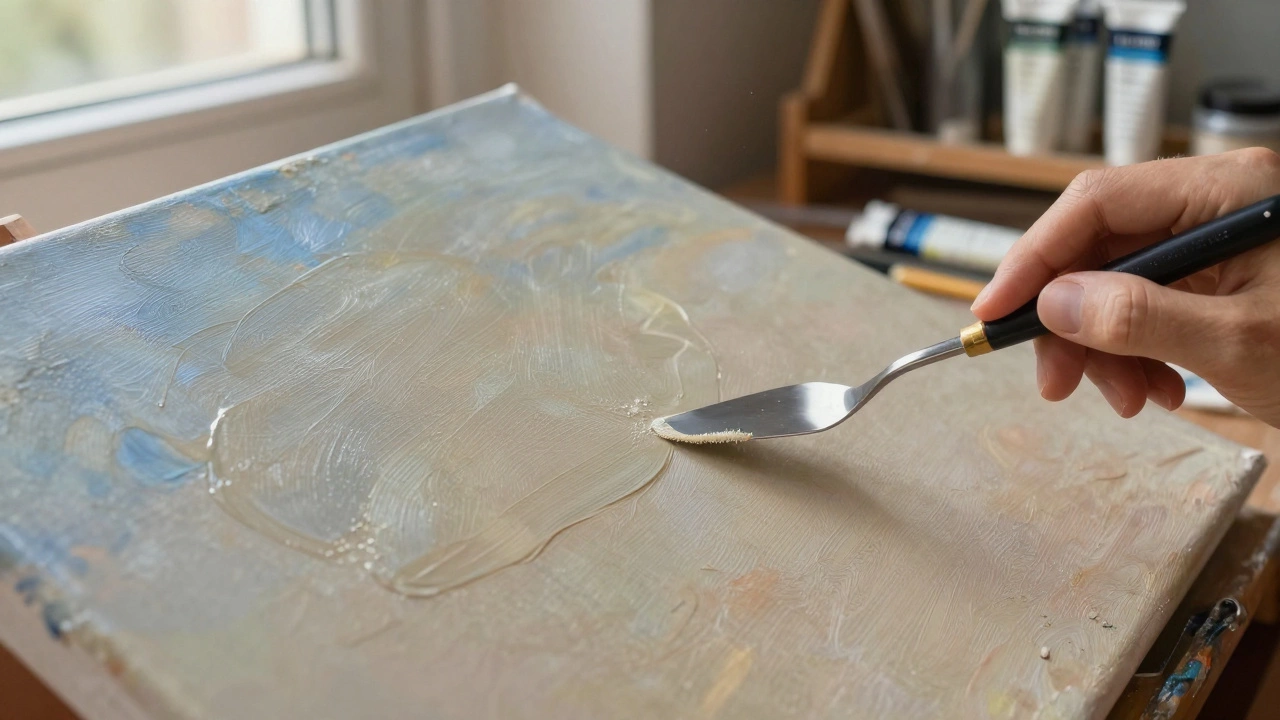
Use a palette knife to scrape a tiny bit of paint off the edge of your canvas. If it’s powdery and doesn’t stick to the knife, it’s cured. If it’s sticky or pulls up, wait longer.
Pigments matter more than you think
Not all colors dry at the same speed. Some pigments contain more oil. Others dry faster because they’re made with natural resins or metal-based compounds.
Slow-drying pigments:
- Lead white
- Ultramarine blue
- Alizarin crimson
- Earth tones (ochres, siennas)
Fast-drying pigments:
- Flake white (lead-free alternatives like titanium white)
- Cobalt blue
- Viridian green
- Payne’s gray
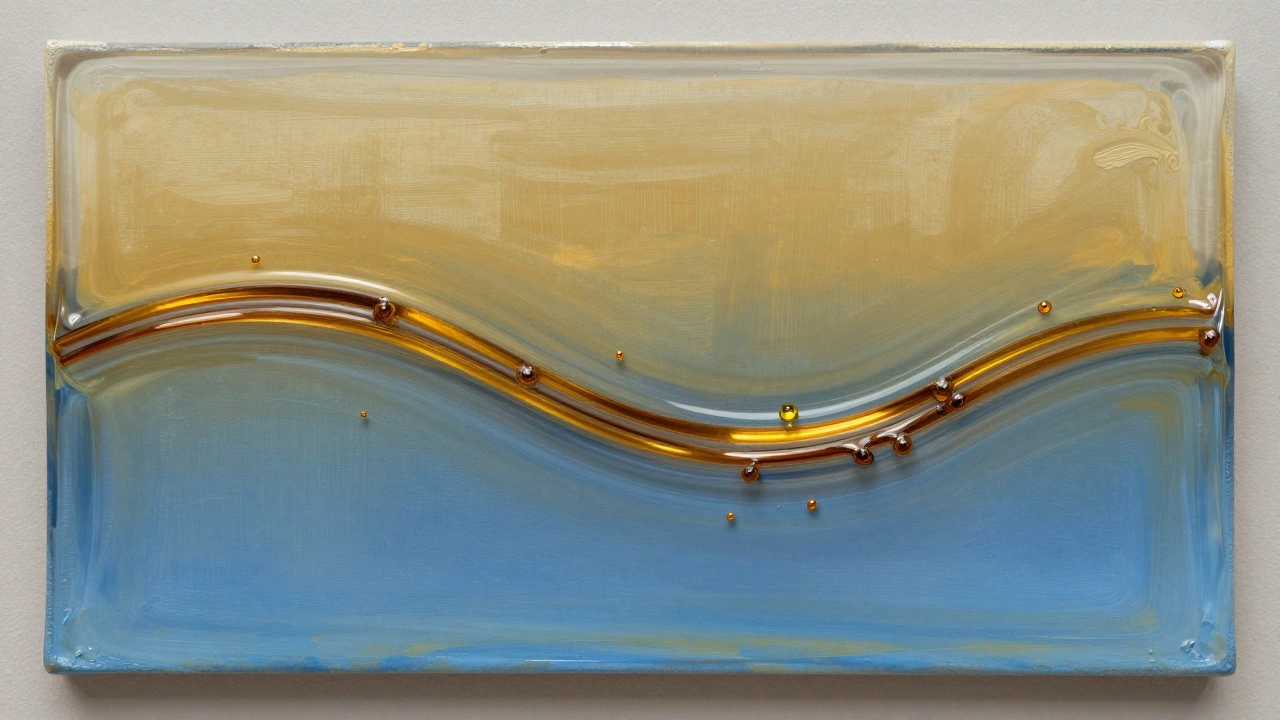
Many artists use a technique called “fat over lean.” That means each layer should have more oil than the one below it. Lean layers (less oil, more solvent) dry faster and form a strong base. Fat layers (more oil, less solvent) stay flexible and prevent cracking. If you put a fat layer over a lean one too soon, the top layer will shrink as it dries, pulling the bottom layer apart.
Environment isn’t optional
Painting in a cold, damp basement? Your painting will take twice as long. Painting in a warm, dry studio with good airflow? It’ll dry faster. Humidity slows oxidation. Temperature affects it even more.
Oil paint dries best between 18°C and 24°C (65°F-75°F). Below 15°C, oxidation slows dramatically. Above 30°C, the surface can skin over too fast, trapping solvent underneath and causing bubbles or peeling later.
Use a small fan to gently circulate air-not blow directly on the painting. Avoid direct sunlight. UV rays can yellow the varnish later. A dehumidifier in your studio cuts drying time by up to 40% in humid climates like Vancouver.
What happens if you rush it?
You’ve painted over a layer too soon. Now what?
- Colors muddy? That’s because the lower layer got stirred up.
- Cracks forming? The bottom layer is still shrinking while the top is rigid.
- Paint peeling? Solvent from the top layer is dissolving the underlayer.
There’s no fix once it’s happened. You can try to gently sand the area and repaint, but you’re risking more damage. Prevention is the only real solution.
Some artists use alkyd mediums like Liquin to speed up drying. These can reduce waiting time to 12-24 hours for medium layers. But they’re not a substitute for proper technique. They change the paint’s behavior. Use them consistently, not as a quick fix.
Real-world example: Painting a portrait
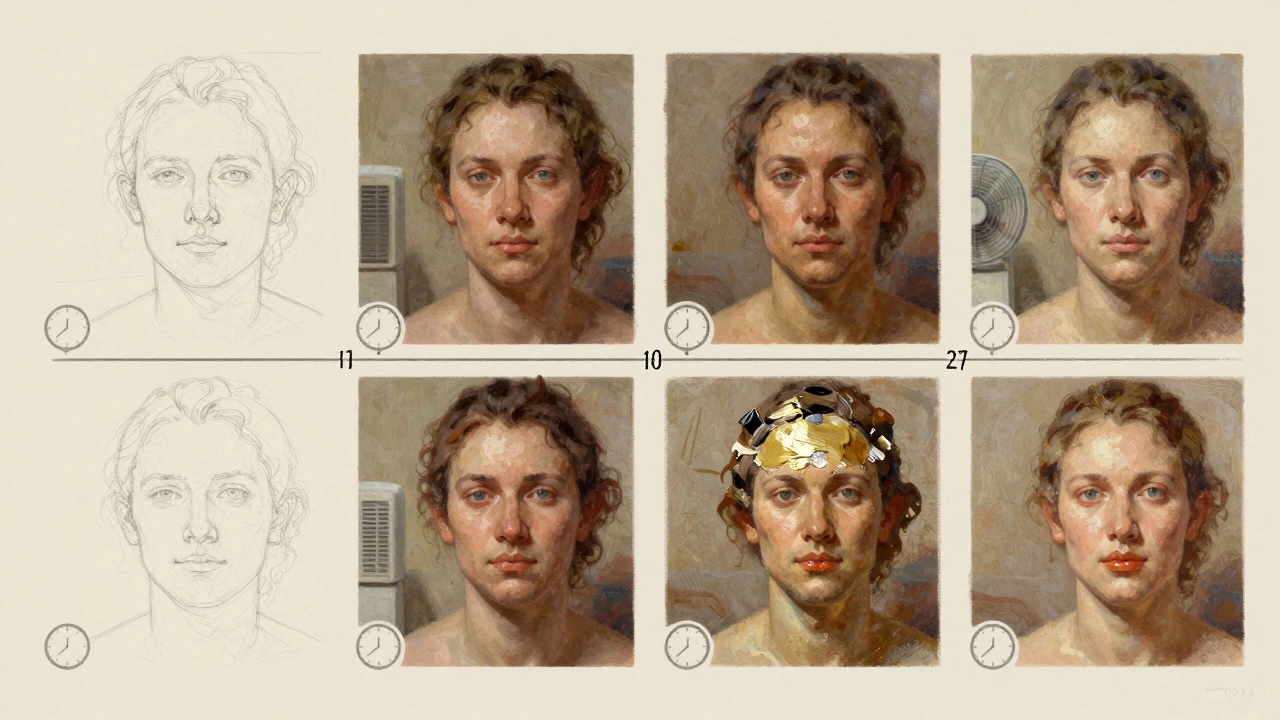
Let’s say you’re painting a portrait. Here’s a realistic timeline:
- Day 1: Block in shapes with thin, lean paint. Use turpentine to thin it. Let dry overnight.
- Day 2: Add shadows and midtones with slightly thicker paint. Add a touch of linseed oil. Wait 3 days.
- Day 5: Paint skin tones with medium thickness. Use titanium white and burnt sienna. Wait 5 days.
- Day 10: Add highlights with thick impasto on the forehead and cheekbones. Wait 14 days.
- Day 24: Glaze the lips with a thin mix of crimson and white. Wait 3 days.
- Day 27: Varnish.
That’s 27 days for one portrait. It feels slow. But the result? A painting that won’t crack in 10 years. A painting that still looks fresh when you show it to a gallery owner in 2035.
How to know when you’re ready to paint over
Here’s a simple checklist you can use after each layer:
- Is the surface hard to the touch? (No fingerprints)
- Does the paint feel stiff, not rubbery?
- Can you scrape a thin edge without it sticking?
- Has it been at least 3 days for thin layers, 7 for medium, 14 for thick?
- Is your studio temperature above 18°C?
If you answer yes to all five, you’re safe to continue.
What about ‘wet-on-wet’ techniques?
Some artists paint wet-on-wet for days-like Titian or Sargent. That’s not rushing layers. That’s working in one session before the paint skins over. It’s a different technique. You’re not building layers; you’re blending and reworking the same surface. That’s fine. But once you stop and come back the next day, you’re starting a new layer. Then the rules apply.
Final tip: Patience is your best medium
Oil painting isn’t fast. It never was. The slow drying time is why it’s lasted 500 years. Artists in the 1500s waited months between layers. They didn’t have alkyd mediums. They had time and patience.
If you’re rushing, you’re not just risking your painting-you’re missing the point. Oil painting teaches you to wait. To observe. To let things unfold. That’s why it’s still powerful today.
Don’t paint because you’re bored. Don’t paint because you think it’s done. Paint because the layer beneath is ready. And when it is, you’ll know.
Can I use a hairdryer to speed up drying between layers?
No. Heat from a hairdryer dries only the surface, trapping solvents underneath. This causes cracking, bubbling, or yellowing later. Oil paint needs slow, even oxidation. Forced heat disrupts that process.
How long should I wait before varnishing?
Wait at least 6 months for a standard oil painting. Thick impasto layers may need up to a year. Varnish too early, and the paint underneath will still be oxidizing. This causes the varnish to cloud, crack, or peel. The only exception is using a removable retouch varnish after 2-3 weeks for display-but that’s temporary.
Do all oil paints dry at the same rate?
No. Titanium white dries faster than lead white. Ultramarine blue can take weeks. Earth pigments like burnt sienna dry slower than cobalt blue. Always check manufacturer drying times on the tube. Some brands even label their paints as ‘fast-drying’ or ‘slow-drying’.
Can I paint over a layer that’s still slightly tacky?
Only if you’re doing wet-on-wet blending in one session. Once you stop painting for the day, the layer is no longer wet-it’s in transition. Painting over a tacky layer later risks lifting, muddying, or cracking. Wait until it’s firm to the touch.
What’s the best way to store a painting between layers?
Store it upright in a dust-free area with stable temperature (18-24°C) and low humidity. Avoid direct sunlight or heat sources. Don’t cover it with plastic-it traps moisture. A clean sheet of paper over the surface is enough. If you’re away for weeks, a closet with a small dehumidifier works well.