Art vs. Sculpture: Key Differences Explorer
Explore how sculpture differs from the broader concept of "art." Click on each feature below to reveal detailed insights about dimensionality, materiality, and viewer experience.
| Feature | General Art | Sculpture |
|---|---|---|
| Dimensionality |
Varies (1D, 2D, 3D, 4D) Includes flat surfaces (painting), time-based media (film), and conceptual works. |
Strictly 3D Occupies physical space with height, width, and depth. Invites movement around the object. |
| Primary Medium |
Diverse Paint, pixels, sound, body, light, code. Material is often secondary to the image or idea. |
Physical Materials Stone, metal, clay, wood, glass. Material choice carries symbolic weight (e.g., marble = durability). |
| Viewer Interaction |
Often Static Viewed from a fixed angle. The perspective does not change as you move (unless it's an installation). |
Dynamic Viewer moves around the object. Shadows shift, details appear/disappear, and form changes with angle. |
| Role of Material |
Vehicle for Expression The medium supports the composition but is not necessarily part of the meaning itself. |
Intrinsic to Meaning Texture, weight, and substance are central. Tool marks and material resistance tell the story of creation. |
| Context & Function |
Broad Spectrum Can be decorative, functional, conceptual, or performative. Defined by intent and curation. |
Aesthetic Contemplation Primarily designed to be viewed. Overlaps with design/architecture when utility is involved. |
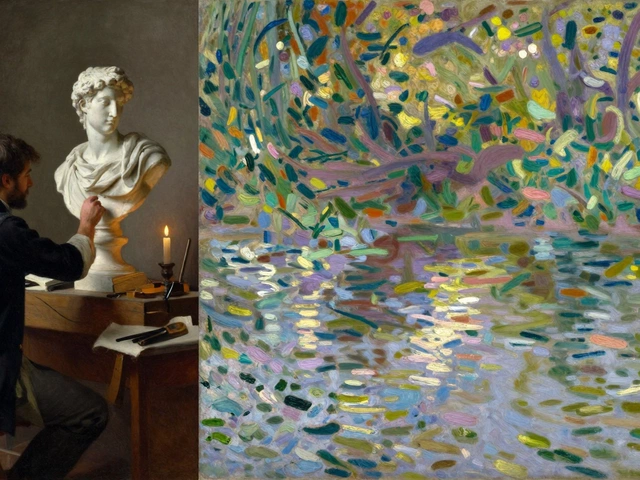
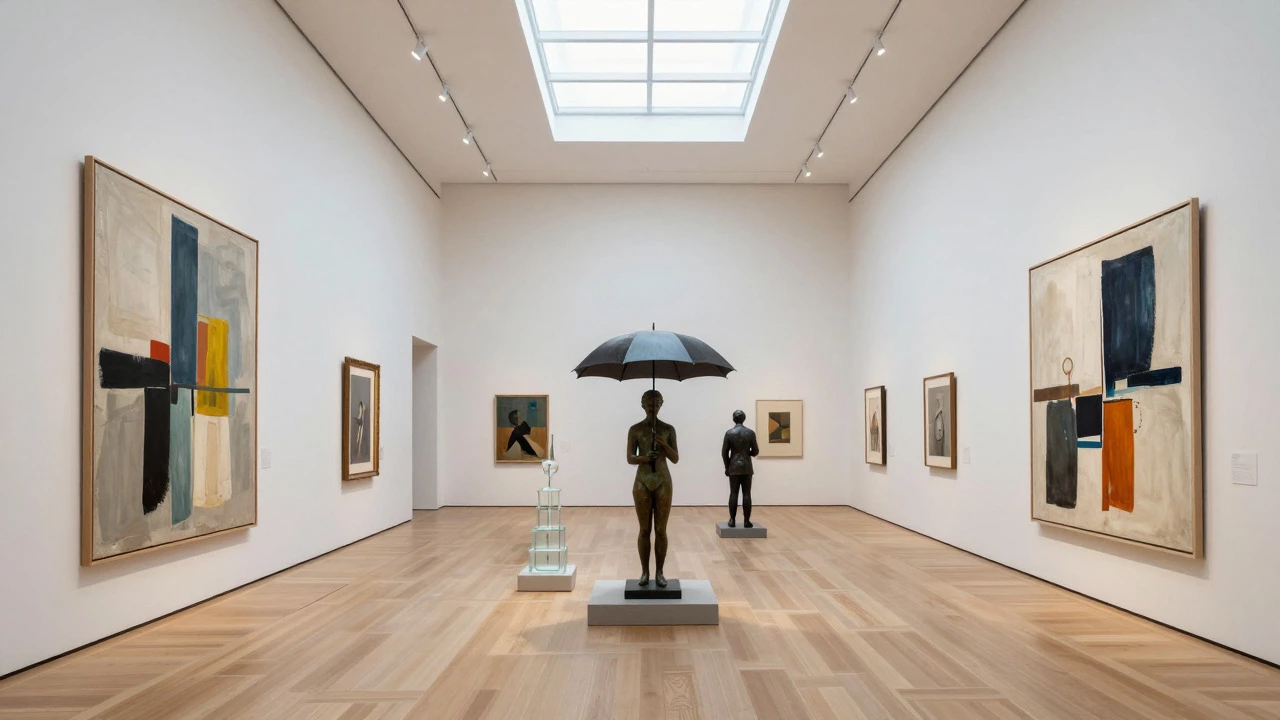
Walk into any major museum, and you’ll see paintings on walls and statues in the center of rooms. It’s easy to assume that sculpture is just a type of art, like how oil painting is a type of visual medium. But if you ask an artist or a historian, the relationship between art and sculpture is more nuanced than a simple parent-child hierarchy. While sculpture is undeniably a form of art, "art" itself is a massive, shifting umbrella that covers everything from digital pixels to live performance. Understanding this distinction helps clarify why some sculptures feel purely decorative while others are considered profound artistic statements.
The Umbrella of Art
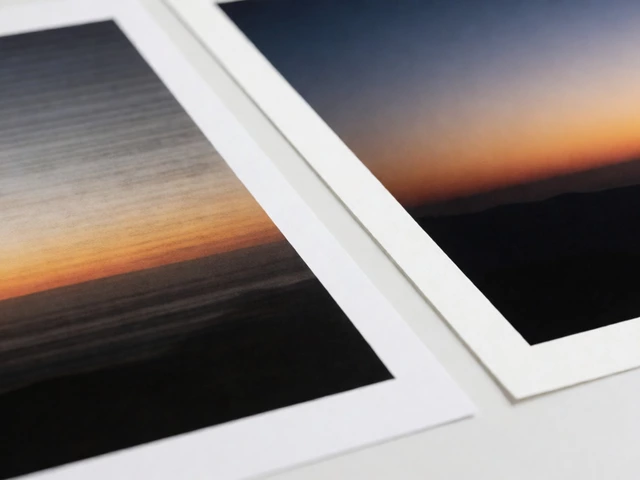
To understand the difference, we first need to define what we mean by art. In its broadest sense, art is the expression or application of human creative skill and imagination, typically in a visual form such as painting or sculpture, producing works to be appreciated primarily for their beauty or emotional power. However, modern definitions have expanded significantly. Today, art includes photography, film, installation, performance, and even conceptual pieces where the idea matters more than the physical object. The common thread isn't the material; it's the intent to communicate, provoke, or explore the human condition through a crafted medium.
This breadth means that "art" is a category defined by purpose and context rather than technique. A chef plating a dish can be seen as an artist. A coder designing a user interface can be seen as an artist. Because the definition is so fluid, comparing "art" to a specific medium like sculpture is like comparing "food" to "bread." Bread is food, but food is not just bread. Similarly, sculpture is art, but art is not just sculpture.
Sculpture as a Specific Discipline
Sculpture is a branch of the visual arts that produces works in three dimensions. Unlike painting, which operates on a flat plane (two dimensions), sculpture occupies space. It has height, width, and depth. This three-dimensionality is the defining characteristic that separates sculpture from other visual forms. When you look at a sculpture, you don’t just see a surface; you perceive volume, mass, and the way light interacts with form from multiple angles.
Historically, sculpture was divided into two main techniques: additive and subtractive. Additive sculpture involves building up material, such as modeling clay or assembling metal parts. Subtractive sculpture involves removing material, such as carving stone or wood. While these methods remain fundamental, contemporary sculpture often blurs these lines, incorporating found objects, light, sound, and even digital projection. Despite these changes, the core attribute remains: the work exists in physical space and invites the viewer to move around it.
Dimensionality and Perception
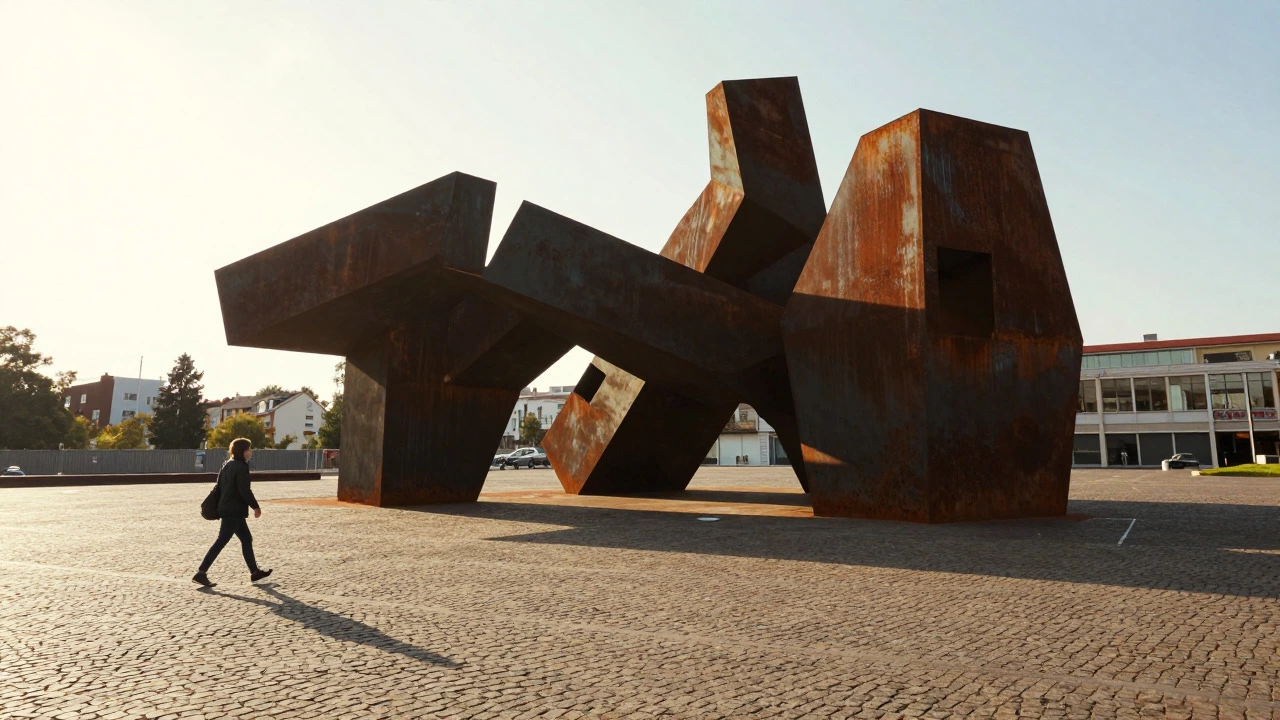
The most tangible difference between general art and sculpture lies in dimensionality. Most traditional art forms, like painting and drawing, are two-dimensional. They create the illusion of depth on a flat surface. Sculpture, however, deals with actual depth. This changes how we perceive the work. With a painting, your viewpoint is fixed; you stand in front of it and take in the image. With a sculpture, your viewpoint is dynamic. As you walk around a statue, the shape changes. Shadows shift. Details appear and disappear based on your angle. This interaction creates a unique spatial relationship between the viewer and the object that flat media cannot replicate.
This spatial presence also affects scale. Sculptures can be intimate, fitting in the palm of your hand, or monumental, towering over city squares. The physical weight and mass of materials like marble, bronze, or steel add a sensory layer that abstract art concepts often lack. When you see a large bronze figure, you instinctively register its heaviness and permanence in a way you don’t with a canvas on a wall.
Materiality and Process
Another key distinction is the role of material. In many forms of art, the material is a vehicle for the image. An oil painter uses paint to create color and texture, but the paint itself is secondary to the composition. In sculpture, the material is often part of the meaning. The choice of marble conveys durability and classical tradition. The use of rusted iron suggests decay or industrial history. The transparency of glass implies fragility. Artists choose materials not just for their structural properties but for their symbolic weight.
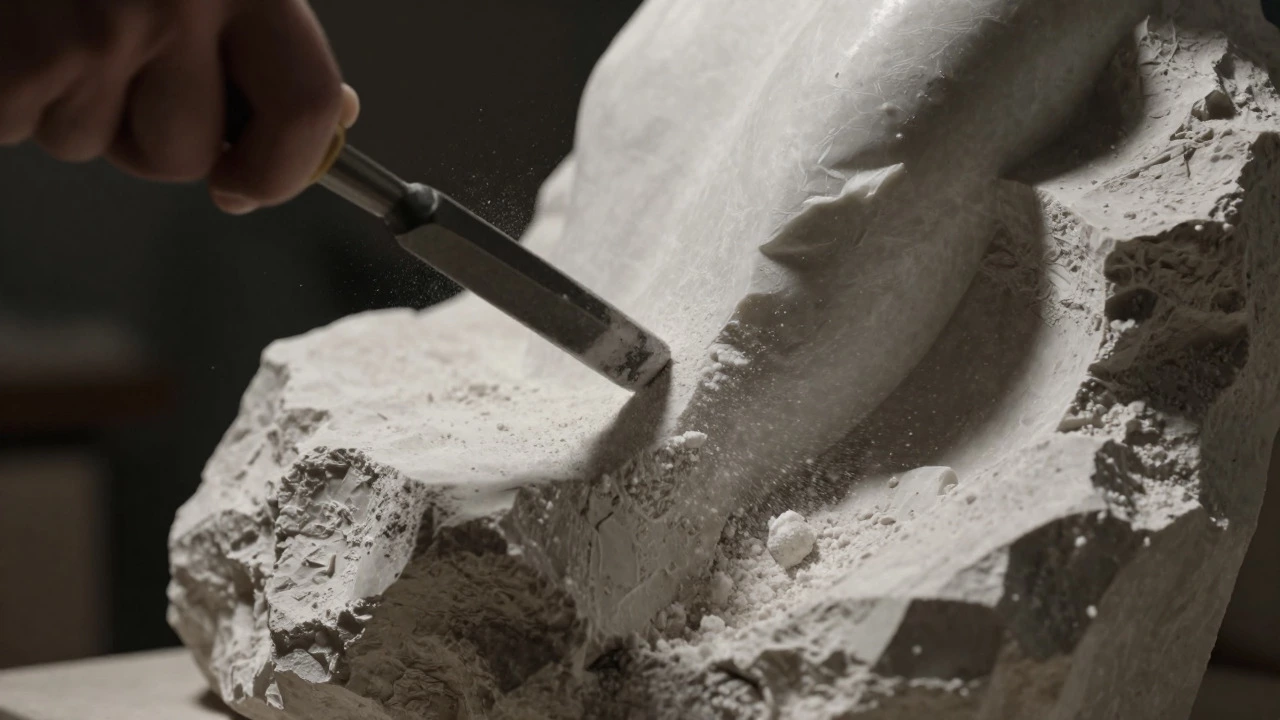
The process of creating sculpture also differs significantly from other art forms. Carving stone requires planning because mistakes are hard to fix; you are removing material permanently. Modeling clay allows for more experimentation, as you can add or remove mass repeatedly. Casting bronze involves creating a mold and pouring molten metal, a complex industrial process. These technical challenges influence the final aesthetic. The visible tool marks on a carved stone tell a story of the artist’s hand interacting with resistant material, adding a narrative layer that is intrinsic to the sculptural process.
Context and Function
While all sculpture is art, not all art is sculpture. And within sculpture, there is a spectrum between functional design and fine art. A chair designed by a famous designer might be considered a sculptural object due to its form, but its primary function is utility. A pure sculpture, like a marble bust of a philosopher, has no practical use other than to be viewed and contemplated. This distinction between utility and aesthetics is a classic debate in art history. However, in contemporary practice, the line is often blurred. Installation art, for example, turns entire rooms into sculptural environments, challenging the idea that art must be a single, discrete object.
Furthermore, the context in which a piece is displayed changes its classification. A rock placed in a gallery is often called art (specifically, minimalism or readymade sculpture). The same rock on a beach is nature. The label "art" is applied based on curation, intention, and cultural agreement. Sculpture, therefore, is both a technical discipline and a conceptual framework. It is the physical act of shaping space, but it is also a mode of thinking about presence, void, and form.
| Feature | General Art | Sculpture |
|---|---|---|
| Dimensionality | Varies (1D, 2D, 3D, 4D) | Strictly 3D (occupies physical space) |
| Primary Medium | Diverse (paint, pixels, sound, body) | Physical materials (stone, metal, clay, wood) |
| Viewer Interaction | Often static (viewing from one angle) | Dynamic (viewer moves around the object) |
| Role of Material | Vehicle for expression | Intrinsic to meaning and structure |
| Examples | Painting, Photography, Film, Performance | Statues, Installations, Carvings, Assemblages |
Why the Distinction Matters
So, why does it matter whether something is labeled "art" or "sculpture"? For collectors, curators, and students, the distinction helps organize knowledge. Knowing that sculpture is a subset of art allows us to study its specific history, techniques, and evolution separately from, say, the history of cinema. It allows us to discuss the unique challenges of working in three dimensions, such as balance, gravity, and negative space. Negative space-the empty area surrounding and between parts of a sculpture-is a concept critical to sculptural design but irrelevant to a flat painting.
For the average viewer, understanding this difference enhances appreciation. When you look at a sculpture, you’re invited to engage physically with the space. You’re encouraged to consider how the object relates to the ground, the air, and your own body. Recognizing that sculpture is a specific language within the broader grammar of art helps you decode the messages artists send through form, mass, and texture. It transforms a passive glance into an active exploration.
Is every sculpture considered art?
Generally, yes, when created with aesthetic or expressive intent. However, functional objects like architectural columns or industrial molds are sculptural in form but may not be classified as "fine art" until they are repurposed or presented in an artistic context. The boundary depends on curation and perception.
What is the main difference between painting and sculpture?
The primary difference is dimensionality. Painting is two-dimensional, existing on a flat surface, while sculpture is three-dimensional, occupying physical space. This means sculpture can be viewed from multiple angles, whereas a painting is typically viewed from the front.
Can digital art be considered sculpture?
Yes, in the form of 3D digital sculpture or virtual reality installations. If the work occupies a navigable three-dimensional space, even if virtual, it fits the conceptual definition of sculpture. Physical manifestation is not always required in contemporary practice.
What materials are commonly used in sculpture?
Traditional materials include marble, limestone, bronze, wood, and clay. Contemporary sculpture expands this to include steel, plastic, glass, fabric, light, sound, and found objects. The choice of material significantly impacts the work's durability and symbolic meaning.
How does sculpture differ from architecture?
Architecture is designed primarily for function and habitation, while sculpture is designed primarily for aesthetic contemplation. However, the two overlap in fields like kinetic architecture and site-specific installations where buildings become sculptural statements.