Landscape Composition Checker
Enter a description of your landscape painting to check if it contains all four essential parts: foreground, middle ground, background, and horizon line. We'll analyze how well each element is implemented based on professional techniques.
When you look at a landscape painting, it’s easy to think it’s just a pretty scene of mountains, trees, and sky. But behind that calm appearance is a carefully built structure. Great landscape paintings don’t happen by accident. They’re built using four key parts that work together to create depth, balance, and realism. These aren’t just artistic rules-they’re how your eye naturally reads space. Master these four parts, and you’ll see landscape paintings in a whole new way.
Foreground
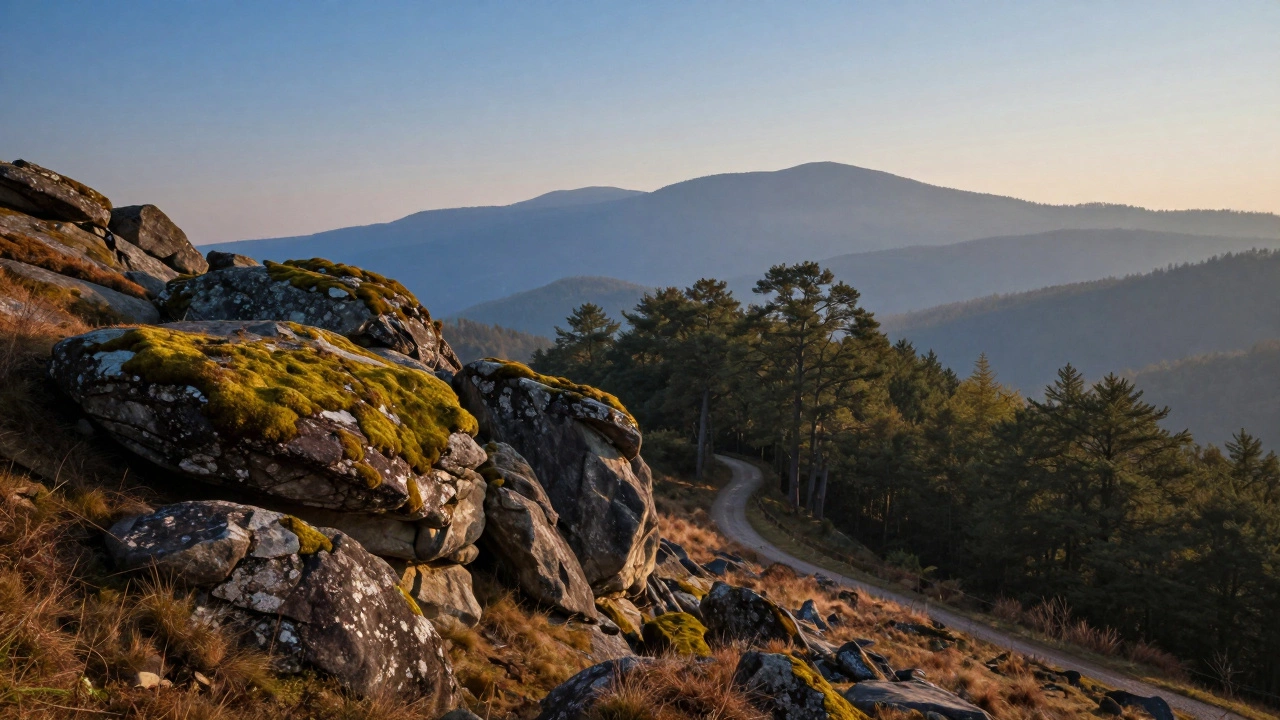
The foreground is the part of the painting closest to you. It’s where your eye lands first. Artists use this area to pull you into the scene. Think of it as the doorway into the painting. A winding path, a cluster of rocks, a fallen log, or even a patch of wildflowers can all serve as foreground elements. These details are usually painted with more contrast, sharper edges, and richer colors. That’s because objects closer to you appear more defined. In a painting by Thomas Moran, you might see moss-covered stones right at the bottom edge, almost reaching out to touch you. That’s the foreground doing its job-grounding the viewer in the scene.
One mistake beginners make is making the foreground too small or too empty. If you leave it blank, the painting feels like it’s floating. The foreground doesn’t need to be busy, but it needs presence. Even a single dark tree stump or a ripple in a stream can anchor the whole composition.
Middle Ground
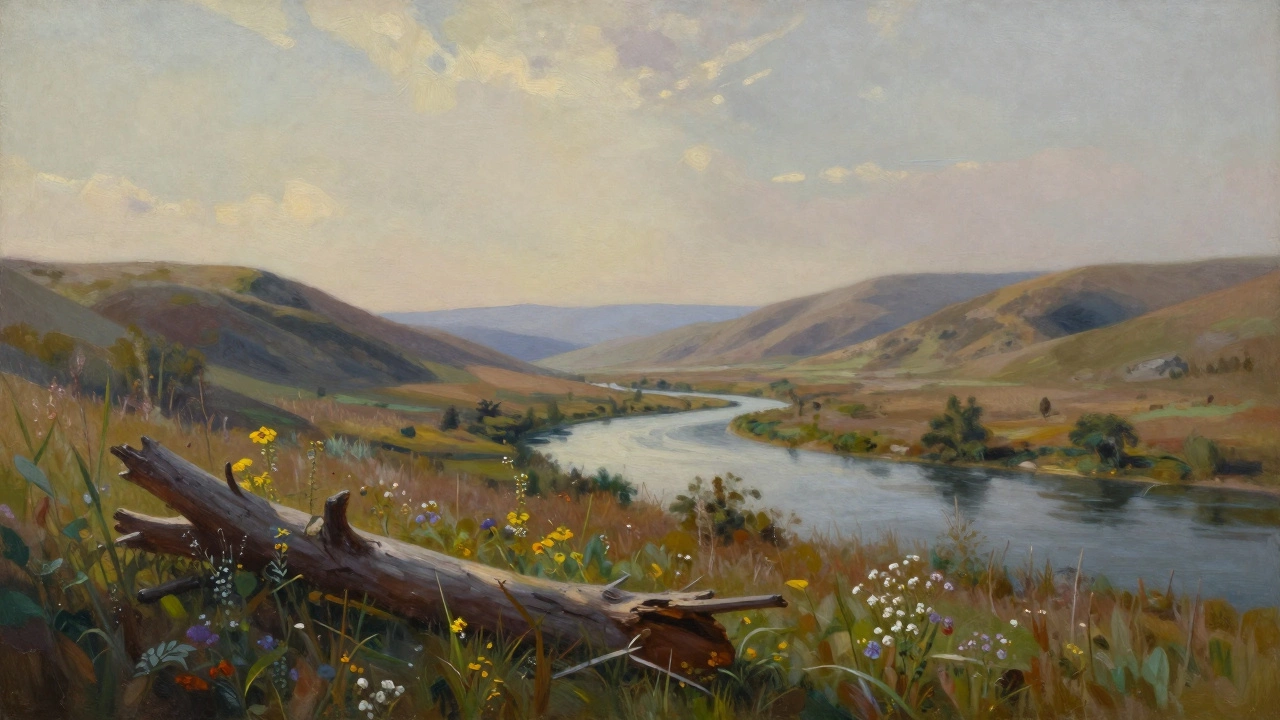
The middle ground is where the story of the landscape unfolds. It’s the bridge between the foreground and the background. This is usually where you’ll find the main subject-a cluster of trees, a farmhouse, a river bend, or rolling hills. The middle ground gives the painting its focus. It’s not as sharp or vivid as the foreground, but it’s still clear enough to recognize. Colors here are slightly muted, and edges are softer. That’s because distance naturally blurs things.
Think of the middle ground as the stage. If the foreground is the entrance, and the background is the backdrop, then the middle ground is where the action happens. In a painting by Albert Bierstadt, the middle ground might hold a valley with a winding river, drawing your eye toward the mountains beyond. Without this layer, the painting would feel flat or disconnected. The middle ground gives the viewer something to walk through, mentally, as they move from front to back.
Background
The background is the farthest part of the scene-usually the sky, distant mountains, or a hazy horizon. This layer doesn’t need detail. In fact, too much detail here ruins the illusion of distance. Artists use lighter colors, softer edges, and less contrast to make things look far away. Blue tones dominate the background because of atmospheric perspective: the air between you and the distant hills scatters blue light, making everything look cooler and fainter.
One of the most common errors in landscape painting is making the background too bright or too detailed. If your distant mountains have sharp ridges and individual trees, they’ll look like they’re right in front of you. That breaks the illusion. A good background should feel like a whisper-not a shout. In a John Constable painting, the sky might fade from pale blue to a soft gray, with barely visible cloud shapes. That’s atmospheric perspective at work.
Horizon Line
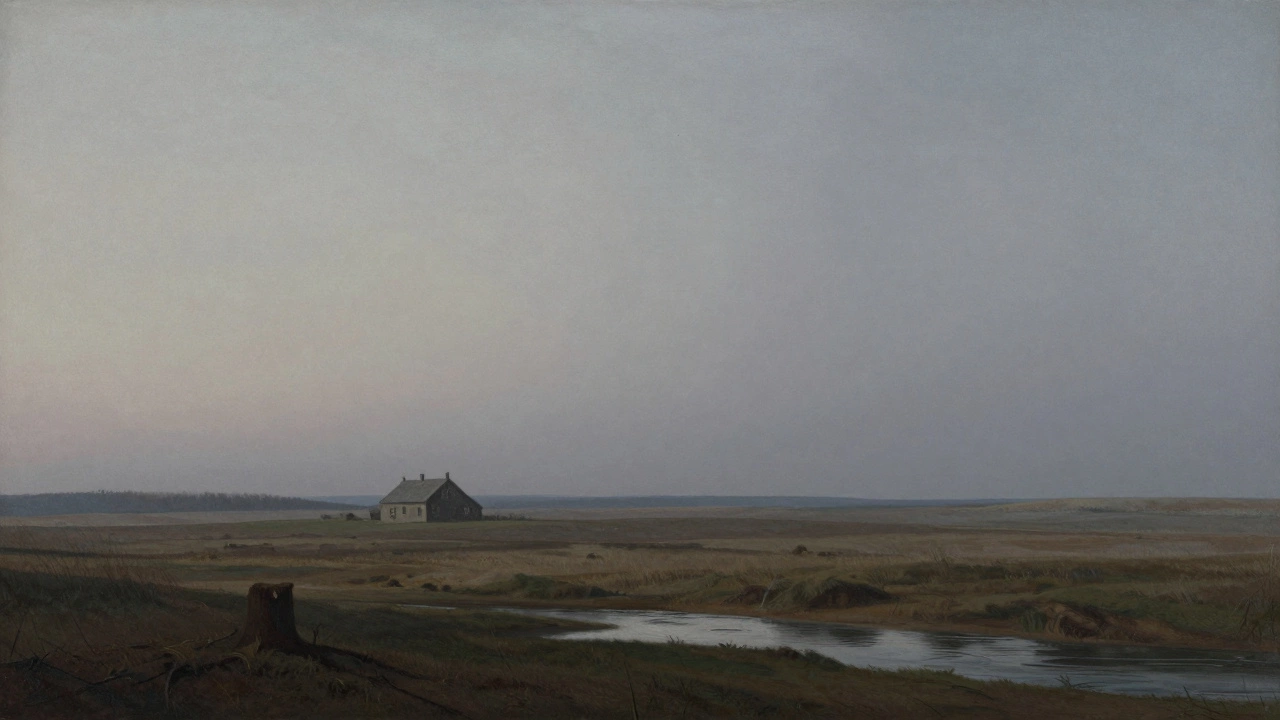
The horizon line isn’t an object. It’s a position. It’s the invisible line where the earth meets the sky. Where you place it changes everything. A low horizon line gives you more sky-great for dramatic clouds or sunsets. A high horizon line shows more land-perfect for wide plains or crowded forests. It’s not about beauty; it’s about control. The horizon line sets the viewer’s eye level. If you’re standing on a hill, your horizon line is higher. If you’re lying on the ground, it’s lower.
Many amateur painters place the horizon line right in the middle of the canvas. That’s a dead zone. It splits the painting in half and makes it feel static. Instead, use the rule of thirds. Place the horizon line either one-third from the top or one-third from the bottom. That creates tension, movement, and balance. In a painting by Winslow Homer, the horizon might sit low, letting a stormy sky take up two-thirds of the canvas. The effect? Power. Emotion. Depth.
How These Parts Work Together
These four parts aren’t separate boxes. They’re layers in a single, flowing space. The foreground leads your eye to the middle ground. The middle ground guides you toward the background. The horizon line holds it all together. If one layer is weak, the whole painting suffers.
For example, if the foreground is strong but the background is muddy or unclear, the painting feels incomplete. If the horizon line is too high, the sky becomes insignificant, and the scene feels cramped. Artists don’t paint each layer in isolation-they build them as a system. The colors in the foreground influence the colors in the background. The shapes in the middle ground echo the shapes in the sky. Everything connects.
Practice this: take a photo of a landscape and mentally divide it into these four parts. Ask yourself: Where’s the horizon? What’s closest to me? What’s in the middle? What’s farthest away? Then try sketching just the shapes, no details. Just silhouettes. You’ll start to see how these layers create depth without any fancy brushwork.
Common Mistakes to Avoid
- Putting the horizon line dead center-this makes the painting feel balanced but boring.
- Painting the background with the same detail as the foreground-this destroys depth.
- Ignoring the foreground-leaving it empty makes the scene feel like it’s floating.
- Using the same color temperature throughout-everything should get cooler and lighter as it moves back.
- Forgetting that the middle ground needs a focal point-otherwise, your eye has nowhere to rest.
These aren’t rigid rules. They’re tools. Once you understand them, you can break them intentionally. But first, you need to know how they work.
Why This Matters
Understanding these four parts isn’t just for painters. It’s for anyone who looks at art. When you know how a landscape is built, you stop just admiring it-you start seeing how it was made. You notice how the artist led your eye, how they created space, how they made a flat canvas feel like a real place. That’s the magic of landscape painting. It’s not about copying nature. It’s about rebuilding it, one layer at a time.
What is the most important part of a landscape painting?
There isn’t one single most important part-each of the four layers (foreground, middle ground, background, and horizon line) plays a critical role. But if you had to pick one, the horizon line is the foundation. It sets the viewer’s eye level and determines how space is divided. Without a clear horizon line, the other layers lose their meaning and the painting feels unbalanced.
Can a landscape painting work without a foreground?
Technically, yes-but it won’t feel complete. A landscape without a foreground often looks like a backdrop or a photo cutout. The foreground gives the viewer a sense of entry, of being inside the scene. Without it, the painting feels distant, like you’re looking through a window rather than standing in the landscape. Even a small element-a rock, a shadow, a patch of grass-can anchor the composition.
Why do distant objects look bluer in landscape paintings?
This is called atmospheric perspective. As light travels through air, particles scatter shorter blue wavelengths more than other colors. So distant mountains, hills, or trees appear cooler and lighter, often with a bluish or grayish tint. Artists use this natural effect to create depth. If you paint distant objects with warm, bright colors, they’ll look too close and break the illusion.
How do I know where to place the horizon line?
Use the rule of thirds. Imagine your canvas divided into three equal horizontal sections. Place the horizon line along the top or bottom third-not in the middle. This creates visual interest. A low horizon emphasizes the sky and mood; a high horizon emphasizes the land and structure. Avoid centering it-it makes the composition feel flat and predictable.
Do all landscape paintings follow these four parts?
Most traditional and realistic landscape paintings do. But modern and abstract landscapes might ignore or distort them. Still, even in abstract work, artists often use the concept of depth-even if it’s implied through color, texture, or shape. Understanding these four parts gives you the foundation to either follow them or break them with purpose.