Jan 19, 2026
Is Spotify still the best music streaming service in 2026?
When people talk about oil painting difficulty, the challenges artists face when working with slow-drying, layered pigments, they often mean the waiting. Unlike watercolor or digital art, oil doesn’t let you fix a mistake in seconds. You wait hours, sometimes days, for layers to dry. That’s not a flaw—it’s the point. Oil painting demands patience, and that’s where most beginners quit. But the real difficulty isn’t the drying time. It’s learning to see value and color in a way your brain didn’t before.
Many think oil painting needs years of training, but that’s not true. What it needs is focus on three things: value, how light and shadow shape form, color mixing, how to get the right tone without muddying paint, and layering, building up paint in thin glazes or bold strokes. You don’t need fancy brushes or expensive canvases. You need one subject—a single apple, a cup, a rock—and the willingness to paint it again, and again, until the light starts to look real. Van Gogh didn’t paint The Starry Night because he mastered technique first. He painted it because he kept trying, even when the paint didn’t behave.
Some say oil is harder than watercolor because it’s unforgiving. But watercolor has its own traps: blooming, bleeding, unpredictable washes. Oil just moves slower, so you see your mistakes more clearly. That’s not a bad thing. It teaches you to plan. It teaches you to think ahead. The hardest part isn’t the medium—it’s your own impatience. If you’re stuck, start small. Paint one thing. Use only three colors. Let it dry. Come back. Adjust. That’s how real progress happens. Below, you’ll find real advice from artists who’ve been there: how to pick your first subject, how to avoid common mistakes, and how to turn frustration into progress. No fluff. No theory. Just what works.
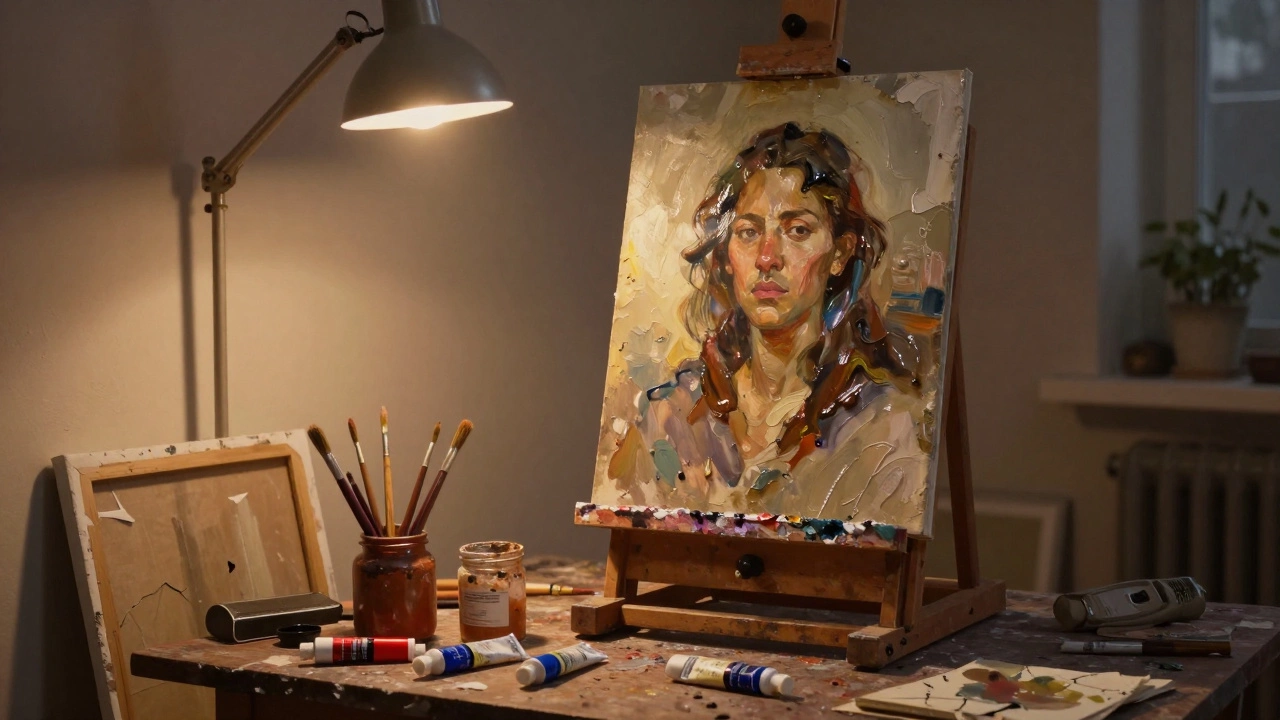
Oil painting is difficult because of its slow drying time, unforgiving blending, complex color mixing, and demanding technique. It requires patience, proper materials, and deep understanding-not just skill.