Jun 30, 2025
World's Most Famous Watercolor Artists and Their Masterpieces
When we talk about classical sculpture, a tradition of three-dimensional art rooted in ancient Greece and Rome that emphasized idealized human forms, balance, and naturalism. Also known as ancient sculpture, it laid the foundation for how we still think about beauty, anatomy, and expression in art today. Unlike modern abstract works, classical sculpture wasn’t about shock or symbolism—it was about capturing the human body as it should look, not just as it does. Think of the smooth curves of a Greek athlete, the calm dignity of a Roman emperor, or the perfect symmetry of a goddess. These weren’t just statues; they were standards.
What made classical sculpture so powerful? It relied on a few core principles: marble sculpture, the dominant medium for its durability and ability to hold fine detail, precise proportion, based on mathematical ratios like the golden section, used to create harmonious figures, and careful attention to drapery, how fabric folds and moves over the body, revealing form beneath. These weren’t random choices—they were rules passed down for centuries. Artists like Phidias and Praxiteles didn’t just carve stone; they studied anatomy in motion, often working from live models, and refined their techniques through trial and error. Even today, art schools teach these methods because they build a strong foundation in form and observation.
Classical sculpture didn’t disappear—it evolved. The Renaissance revived it, with Michelangelo studying Roman fragments to create his own masterpieces. Even modern figurative artists, whether working in clay, bronze, or resin, still reference these principles. The way a shoulder turns, how weight shifts on a hip, how light catches a cheekbone—these details come from classical training. You don’t need to carve marble to understand them. Just look closely at any realistic portrait or figure piece, and you’ll see echoes of ancient Greece.
Below, you’ll find articles that dig into the tools, techniques, and history behind this enduring art form. From beginner sculpture guides to how to interpret ancient works, these posts connect the dots between what was made thousands of years ago and what artists are doing today. Whether you’re carving your first piece or just wondering why these statues still draw crowds, you’ll find something that makes sense of it all.
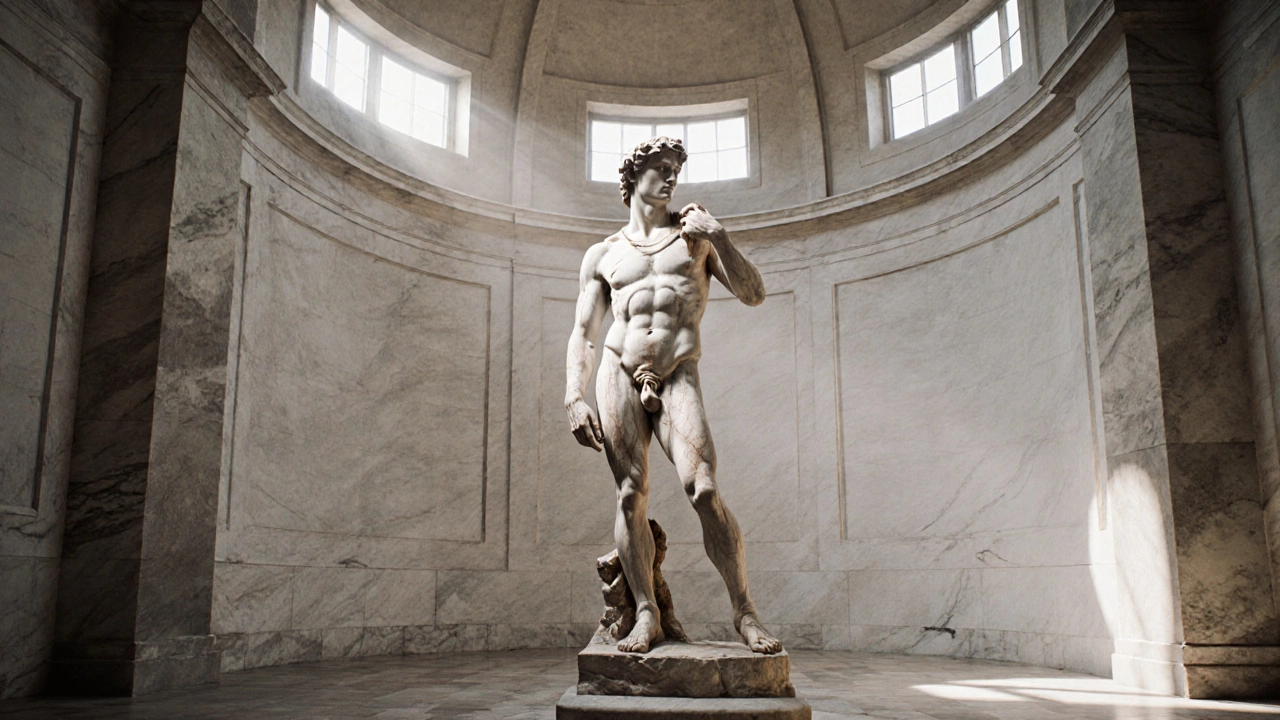
Discover iconic examples of sculpture art from Michelangelo's David to modern installations like Cloud Gate. Learn what makes sculpture unique and how it connects us across time and culture.